Polymarket is the first prediction market platform to really take off. To the point that they even signaled the 2020 elections weeks.
If a platform is forecasting elections, sports games, and beyond, then trust me, properly explaining how does Polymarket work will be a benefit.
Polymarket prediction markets work a bit like betting companies, but in this case, it opens the door to a variety of markets that were not available before, from traditional betting companies at least.
Questions are everything.
— Polymarket (@Polymarket) June 23, 2026
Because the people who never stop asking are the ones who find answers. pic.twitter.com/MZteQLEfqQ
You want to bet on what the NYC weather will be? Or who will win the Super Bowl? Or whatever the hell people are into nowadays. Then, Polymarket is the place to be. You can bet on anything, really.
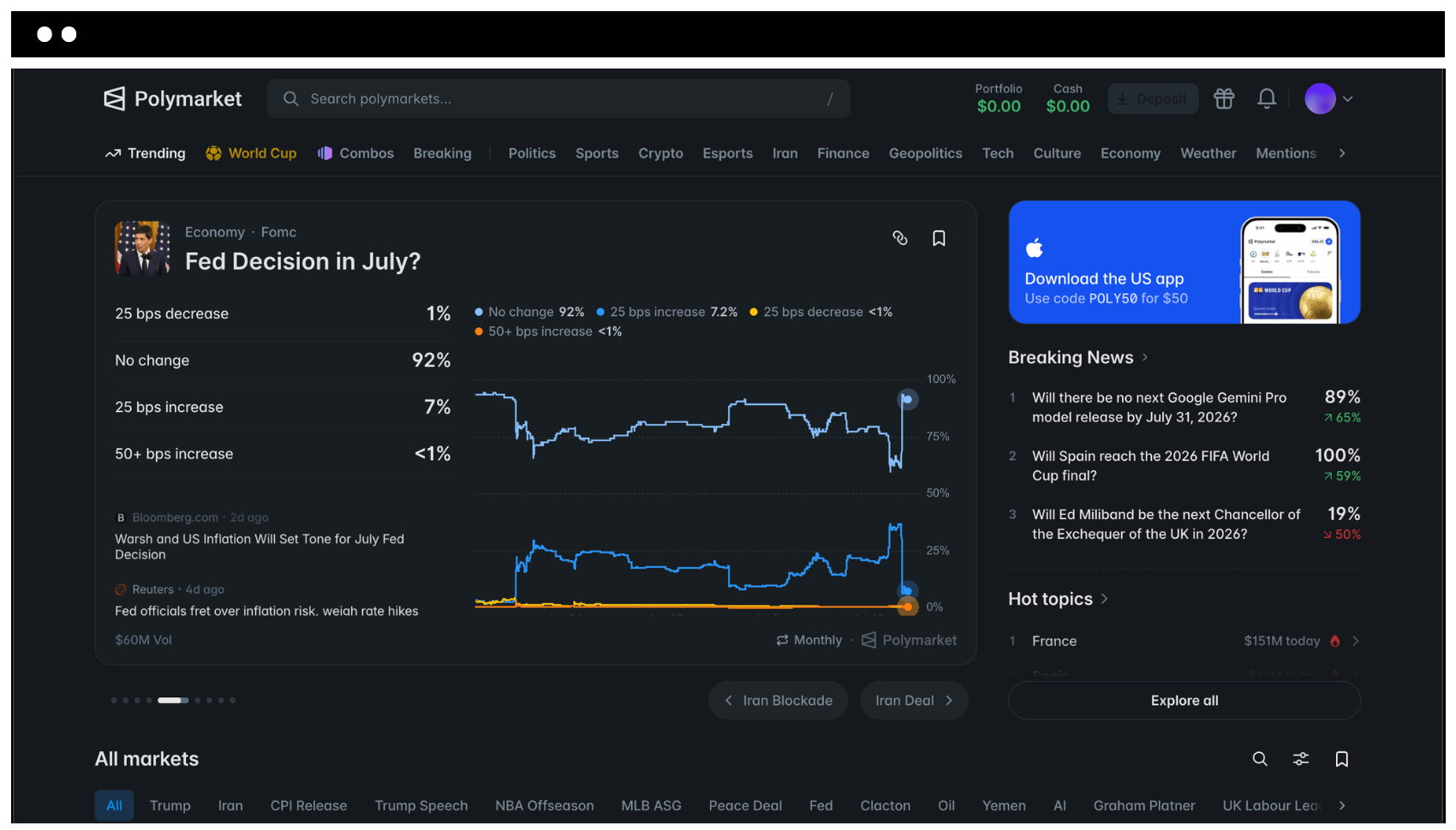
With that being said, I test all user facing products. Meaning, those that everyone can use. If you are wondering, I do also for enterprise products with a free trial, or checking block scanner data.
And yes, I’ve won and lost plenty of money having fun with these prediction market platforms, while also testing them for my own sake, especially as the founder and editor of Joined Crypto.
I’m not down bad, but I did lose more than I wanted.
So there you go, lesson learned.
On the upside, there is a different side to the story.
"My favorite part about this is knowing that I can make a risky financial play if I really had no option. Something as bad as paying the mortgage with the remaining $1k left, after losing cash to a bike accident, or whatever tough situation imaginable."
Or when there is no bank loan to save you, and you need to pay an urgent medical bill for a family member.
When things get tough, knowing all the options on the table can help.
Again, what you do with your money is your responsibility.
Alright, let's get this guide started.
Learning About Prediction Markets Back In 2021
What was unpredictable, for me at least, was that my dream of raising a $4m seed to build a crowd-funding platform myself in 2021 was going to get cut short.
Why? Because of platforms like Polymarket, leveraging data oracles and running on blockchain.
Funny enough, I was close to getting my lead investor down the pipeline, just for them to reject me by showing me the rise of prediction markets and blockchain technology itself.
One thing led to another, went all in on crypto and blockchain, not just as a hobby.
And now we are here together at Joined Crypto.
Without further ado, let’s dive into how Polymarket works.
Markets on everything.
— Shayne Coplan 🦅 (@shayne_coplan) October 7, 2025
We’re proud to announce that $ICE, the owner of @NYSE and the largest exchange company in the world, is making a strategic investment of $2 billion into Polymarket, valuing us at $9 billion post-money.
Our partnership with ICE marks a major step in… pic.twitter.com/oShaglRx9p
If you need to quickly navigate across sections of this post, check the outline below.
How Does Polymarket Work? The Complete Guide (2026)
- Learning About Prediction Markets Back In 2021
- What Is Polymarket: How Does It Work?
- How Polymarket Works: The Core Mechanics
- The Blockchain Infrastructure Behind Polymarket
- How To Get Started On Polymarket
- How Market Resolution Works
- How Polymarket Makes Money
- Fees On Polymarket
- Providing Liquidity On Polymarket
- Understanding Trades On Polymarket
- Polymarket vs. Prediction Market Competitors
- Is Polymarket Legal? Controversy and Risks
- Risks Of Using Polymarket
- Who Are The Investors, And The Current Valuation
- Frequently Asked Questions (FAQs)
- Getting Started with Polymarket
What Is Polymarket: How Does It Work?
Polymarket is a prediction market that initially started in a decentralized fashion before implementing KYC sign-ups, specifically in the United States.
Founded by Shayne Coplan, a Manhattan native with big dreams to disrupt the way we speculate and benefit financially.
For some, Polymarket might be seen as a gambling platform. For me, it’s a platform that showcases the engine behind the house, since all smart contracts and chain activity are public.
Give it a shot before you open your Polymarket account.
Economist Friedrich Hayek proposed decentralized ideals, paired with Robin Hanson’s concept of futarchy, which sheds light on the concept of governance by betting markets. Something that Coplan was fond of.
The latter was then encouraged to create a platform for crowd-sourced prediction.
Launched on Polygon, an Ethereum L2, leveraging the decentralization aspect. Meaning that almost any country could interact with the platform, especially those that are not leveraging KYC.
I was trying to raise funds to build a crowdfunding platform - declined by Base10 and Raptor because of Kalshi.
So yeah, I did try to raise $4m back in 2021 to build a sports-related crowdfunding platform.
Somehow, my good friend Seb hooked it up with intros to the very best out there, including Slava Rubin, the founder of Indiegogo, Alexis Ohanian, founder of Reddit, and James Pallotta, the former owner of the Boston Celtics and A.S. Roma, among others.
The moment Base10, a leading private equity firm, mentioned Kalshi, all my efforts seemed to vanish.

Kalshi followed Polymarket into the prediction market industry, while I was stalking a former platform called Ideamarket, which did not have as much impact as these two giants.
Only an OG would have a sign up email with that Kalshi old school logo. I've been following them for years now.
How It Started, The Shayne Coplan Origin Story
After ditching NYU as a freshman somewhere around 2016-17, to chase crypto and blockchain interest.
This man kept launching businesses. Failure after failure, running out of money, and getting to a point where I’ve been with tons of entrepreneurs.
“I quite literally had nothing to lose.” - Shayne Coplan
As a side note, as you read this, know that I also went through that stage after failing to raise funds for my crowdfunding platform.
Again, if it wasn't for this failure, I would have never broken into the crypto industry, and you would not be reading this.
2020, running out of money, solo founder, HQ in my makeshift bathroom office. little did I know Polymarket was going to change the world. pic.twitter.com/TktiCXQgXr
— Shayne Coplan 🦅 (@shayne_coplan) November 6, 2024
How Much Did Polymarket Raise
Shayne started with a humble $4m seed raise in 2020.
Just take in mind that literally the CFTC out of all departments is after his work.
In 2024, $45m landed in Polymarket’s hands after closing a Series B, turning Polymarket’s empire into a $200-500m business.
To top it off, in 2025, things really took off. To be honest, this might have been the biggest meteoric rise I’ve ever seen.
So, after that epic toilet picture of his. Shayne now sits on a comfy $1b net worth under his name.
And just keeps getting higher.
Polymarket vs. Traditional Betting: No House, No Bookmaker
Polymarket works more independently than your typical betting platform.
Betting platforms serve liquidity to markets better than their decentralized counterparts.
When you see a market in a betting platform, a sportsbook for example, the chances of clocking in your order without issues is the norm.
When you work with a decentralized platform, markets get approved left-and-right at scale, and many markets simply don’t offer enough volume to complete a smooth transaction.
How Polymarket Works: The Core Mechanics
How Polymarket Shares Are Priced ($0.00 to $1.00)
If you were to see any market today, you will notice that if you add the price of a YES event contract with a NO event contract, the sum will match $1.
YES And NO Outcome Shares, A Real Example
We vibe coded a little example here for you to tinker with.
Give it a shot before you open your Polymarket account.
Selling Before Resolution: Locking In Gains Early
Picture this: when you buy $10 of a specific listing, you are buying a set number of contracts.
The coolest part is that you can exit your position at your convenience.
Does A 20% Pump Or A Dump Affect You?
Then simply close your position.
These are things you can easily do with any Web2 betting company.
The beauty of Web3 and crypto is the blockchain ledger and how you can tap into the public database to route your own plays through rules and automation.
This trader printed +$950,000 in just 1 month on @Polymarket
— Yri (@yri911) July 13, 2026
The interesting part?
He didn't trade football.
He didn't trade Bitcoin.
He didn't trade politics
He made almost $1M by predicting ATP and WTA tennis matches what's even crazier is that he placed 21 trades, won only… https://t.co/dxhKg3gmQG pic.twitter.com/2QXSewHwMj
Combo Trading, Parlay Style
In July, Polymarket introduced a novel take on prediction markets.
JUST IN: Crypto prediction platform Polymarket officially launches combo trading. https://t.co/Dr8nqZif53
— Watcher.Guru (@WatcherGuru) July 11, 2026
At its core, a parlay is pairing one or more markets.
What might seem novel to the prediction markets world is actually a nuance from what traditional betting platforms offer, a slight difference.
ANNOUNCING: The Combo Cup.
— Polymarket (@Polymarket) July 13, 2026
$50k in daily bonuses — paid out to the top Combo trades on Polymarket.com
Ends July 31st.
Place any combo here: https://t.co/ypUQ0xj7W9 pic.twitter.com/9Y4VIowHvY
The CLOB Order Book: How Prices Are Set By Traders
What an acronym right? CLOB.
"What is the CLOB on Polymarket? - The type of thing that sounds complex, but it’s really a bunch of nerds agreeing to saying stuff like this."
It’s actually super simple.
To keep it short, it means Central Limit Order Book.
It’s basically people placing bets, “orders”, against each other. The whole Polymarket order book runs on its own.
You can opt for either or in Polymarket:
- Limit Orders: orders that are preset for the future. It really does not matter if it’s a “YES” or “NO”.
- Market Orders: orders are executed instantly, that’s the core of every market order.
The Blockchain Infrastructure Behind Polymarket
Why The Polymarket Polygon Combo Made Sense
At the time, EVM-based chains along with Ethereum's main net were dominating.
Shayne had a background in collecting NFTs, just like me.
The work that L1s like Solana and Hyperliquid did was basically nonexistent.
He tapped into a few pieces of FEWOCIOUS early, bagging some ETH like everyone else.
I’m not completely sure why he opted for Polygon. Hopefully not because it says “poly” in the beginning. It would be hilarious if so.
Pretty funny that Polymarket, Polygon, and anything Poly might have a relationship with the L2 itself. As if it was on purpose, positioned for grants perhaps. A good question for Shayne, I guess.
On the other hand, Polygon was the best Ethereum L2 at the time. So my train of thought tells me that for the high TPS requirements he needed, there was no other choice.
You can’t expect to hit product market fit (PMF) with a slow and costly chain per translation.
A quick reminder that each Ethereum L1 transaction would cost upwards of $3 back in the day, long before the Ethereum Fusaka update.
Smart Contracts and Non-Custodial Wallets
Built with Polygon’s EVM-compatible smart contracts, Polymarket did a good job of picking the one chain that has managed to remain fully operational over the years.
That’s without mentioning how top non-custodial wallets like MetaMask dominated the market. It made absolute sense to pick EVM-ready chains above anything else.
KYC Login for the US market
The one thing that Polymarket needed to catch up with Kalshi's meteoric rise was to meet the requirements of local jurisdictions in the US.
Luckily for them, all they had to do was match Kalshi’s heavy lifting against the CFTC.
Peep the X post below for more info.
Kalshi is now valued at $22B
— StarPlatinum (@StarPlatinum_) May 7, 2026
be Tarek Mansour and Luana Lopes Lara
- 22-year-old finance quits
- Obsessed with prediction markets
- Spot the gap: no direct hedging for economic events
- Brexit inspires the idea
- convoluted strategies won't cut it
2018: Decide to build Kalshi… https://t.co/TBdXDgxmML pic.twitter.com/Az3Di8HvPg
For me, once I saw Kalshi get the green light to operate in the US, I knew Polymarket would follow.
Reminder that the market innovator will always be Shayne and the Polymarket team.
Now that both are going head-to-head, with thousands of prediction markets trailing, watching these teams operate is a whole movie.
How To Get Started On Polymarket
Setting Up a Wallet
Polymarket will not set up a crypto wallet for you, so you are on your own.
If you need some help on picking one, we broke down many in our post about the best NFT wallets in the market.
They are all great to be honest. At this point, you can opt for Polygon, Ethereum, Arbitrum, and Base. If you notice closely, these are EVM ready chains.
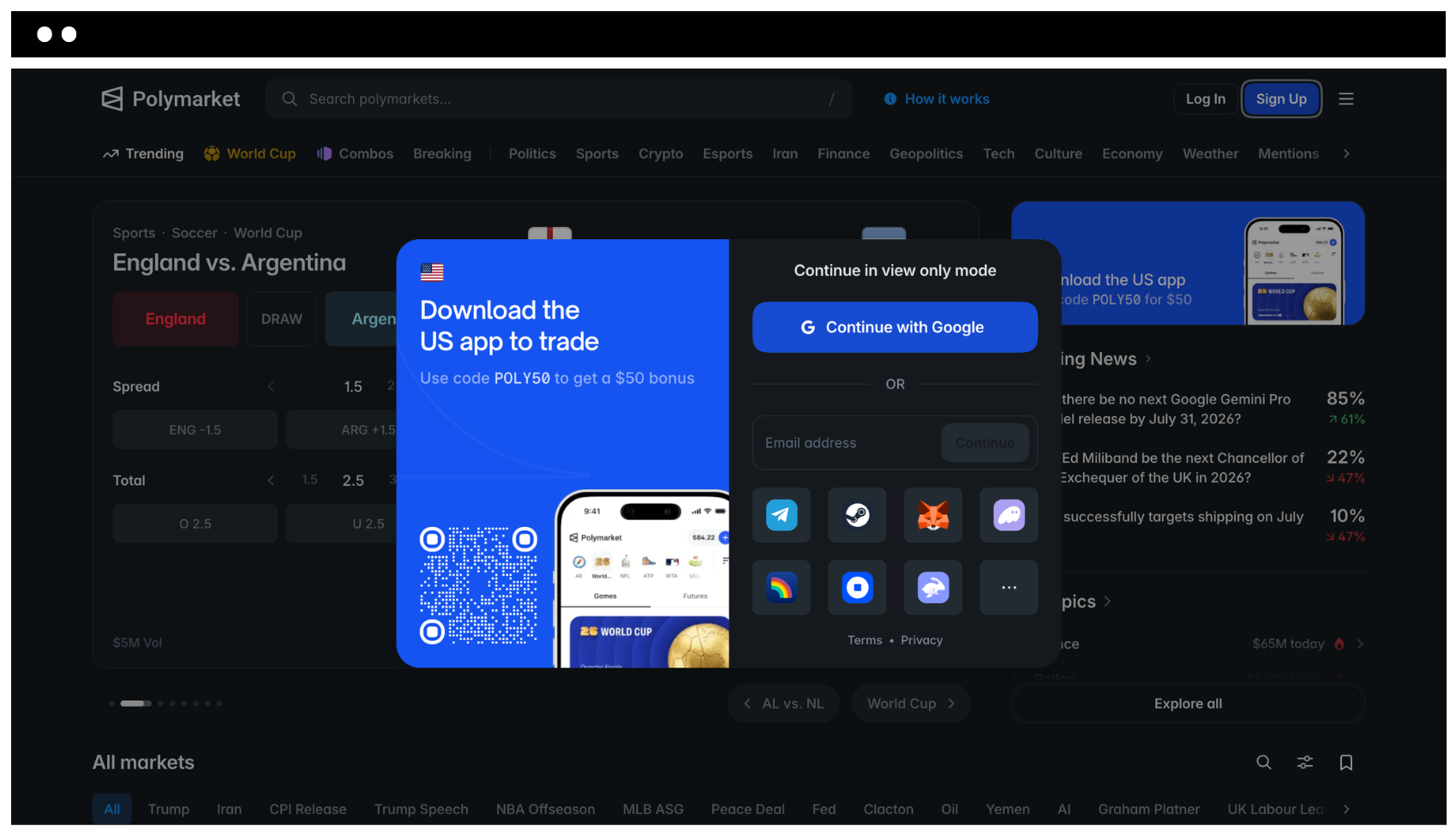
At this point, even the Phantom wallet supports Ethereum. If you are new to crypto wallets, give Metamask, Phantom, or Rainbow a shot. My top picks, else give our wallet article a shot.
How To Use Polymarket And Placing Your First Trade
Don’t think about this too much.
Here at Joined Crypto we steer away from speculation.
Anyone pushing you to test anything in crypto with more than $10 is certainly not part of this industry. And it’s likely in the degen circle at your local crypto event.
Do not interact with these folks, the goal of this article is not for you to reach profit, but to simply understand how the platform operates.

Using Stablecoins: The Polymarket USDC Way
YES and NO event contracts are backed fully on a 1:1 collateralized dollar $1, held in USDC.
I’m not sure if this is the first time you have visited Joined Crypto, but as we have pushed before, we highly recommend newcomers to start with a conservative amount to just test these tools out.
Meaning that $10 can do the trick wherever you are in the world. Anyone telling you otherwise either does not know what they are talking about, or has some weird agenda going on.
Therefore, considering we are a crypto media site, we recommend you to consider using stablecoins to break into the space.
Polymarket, along with their entire suite of Web3 wallets available, serve just fine to get the party started.
If you are unsure how USDC and stablecoins actually work, or which out of all stablecoins to go for, then give our best stablecoins guide a read.
The platform solely operates via EVM blockchains, meaning you will be running on Ethereum based tech. Therefore, USDC, the one stablecoin that has followed the proper compliance journey here in the US, would be a good choice to test it out.
Ethereum tech, means gud tech.
So give it a shot.
What is pUSD? Polymarket’s Official Stablecoin
In April 2026, Polymarket launched their very own stablecoin called pUSD.
Polymarket’s native stablecoin pUSD has crossed $500M in supply, ranking among the fastest growing stablecoins of 2026.
— The Block (@TheBlockCo) June 24, 2026
Apr 28 (launch day): $213M
Today: $509M
An app-specific stablecoin more than doubling to half a billion in under two months is extraordinary. pic.twitter.com/UvACLBLmI2
For those that don’t know, every single company on earth that has any interest in crypto will end up developing their own household stablecoin.
So, to me, it’s not that much of a novelty.
Although, if any prediction market is doing this, paired with a cool sign up offer, give it a shot.
On the other hand, the fact that they launched it means that once again that Shayne’s team is staked with crypto natives, a positive for the space after all.
For instance, Kalshi, their closest competitor, only runs on USDC.
The leverage here is that pUSD transactions create yield for Polymarket as a company, meaning a longer runway, and more room to test the boundaries of fintech once again.
How Market Resolution Works
Who Decides the Outcome? Understanding the UMA oracle
An oracle is essentially the source of truth.
When it comes to serving the US market, note that Polymarket does not operate with an oracle per se. Polymarket’s US arm operates via a CFTC-registered smart contract market.
UMA for Polymarket is just that outside the US. Their Managed Optimistic Oracle signals to Polymarket the outcome of a particular market.
It operates completely independently from Polymarket itself.
The DVM vote is UMA’s last shot-caller, and it’s especially important when there is a market with high volume and massive stakes.
At times, these companies have to face the law when the stakes for a market outweigh the rest, such as an election market for example.
The clear distinction is that UMA resolves their international operations, and the US runs differently.
What Happens When a Market Resolves
When a market resolves, the prize pot gets distributed.
Meaning the settlement process gets done then.
The winners get rewarded in proportion to their bets.
What Happens If a Market Is Disputed
Learning this was wild, and I had no idea how intricate it could be.
Follow me on this one.
In summary, when there is a dispute in the market. There is a sequence of events.
- Proposal
- First dispute
- Second proposal
- Second dispute, followed by a DVM vote
- The vote itself
How Polymarket Makes Money
Through fees, like any other prediction market platform or betting company.
The more you speculate, the more they earn.
Period.
Fees on Polymarket
Taker Fees
When you buy a contract on a YES decision, for instance. Essentially, something WILL happen. You are the owner of said call, with a monetary value.
Once sold, Polymarket then grabs “taker fees”, essentially grabbing a cut from the bag you just made.
Polymarket fees are subject to change. So if you plan on being serious about it, make sure to keep up with any updates.
Deposit and Withdrawal Costs
It really depends on your currency of choice.
Crypto deposits and withdrawals are very small compared to traditional fintech rails, basically those who prefer to use traditional bank accounts and payment gateways.
If you opt for the latter, with traditional banking providers, your Chase account, or almost any bank, then you are looking at 1-3% processing fees depending on the provider and payment method.
If your bank does not get along with crypto, we made a good crypto-friendly banks guide that can help you find an alternative.
Slippage and Liquidity Costs
The hidden cost for those who opt to run their Polymarket account with crypto.
Depending on the chain and whether it is congested or not, the contracts you buy can sometimes miss the mark by a bit.
When closing or opening a position when the charts spike, or there is a lot of congestion on your blockchain of choice, these things can happen.
We actually wrote a straightforward guide on how this works with a live demo app in our what is slippage in crypto post.
There are instances when one would pick a very niche market to trade on, but the caveat is that it has very thin order books.
If this happens, you will realize that you are not buying contracts at a 1:1 price, like the one shown on the platform.
Instead, you are buying just a subset of contracts at a set price, while the rest get processed under different prices.
We break down order books in depth in our post about how to grow an exchange business.
Providing Liquidity on Polymarket
Retail powers the engine of each market. The volume you see on each is composed of YES vs. NO calls. Order books get filled by these stand-alone users.
On the other hand, professional/algorithmic market makers do tap into the juiciest markets, those that amass a lot of volume. These are perfect for attracting firms or bots that trade what traditional retail won’t do daily.
Let’s say an election-related market to predict the next president of the US. The amount of volume this market generates at a global scale justifies market makers and professionals to tap into these contracts.
Understanding Trades on Polymarket
Hold To Resolution vs Sell Early
This is straightforward and only requires a single trade, even just $1, to figure it out.
Anything else beyond this amount is you gambling, so don’t call me when your Polymarket portfolio gets dumped by someone else.
Holy... I actually jeeted $26.1K on Polymarket 🤦♂️
— 𝓗𝓸𝓹𝓮 (@HopeAlpha_) July 9, 2026
All because I sold too early.
Imagine if I just touched some grass instead of the sell button 💀 https://t.co/BNzARtWmuv pic.twitter.com/z7yqronfo3
Alright, follow the image above. Note how there is a sell button to exit your position before there is a Polymarket resolution. For the most part, that’s all you need to pay attention to.
Polymarket vs Prediction Market Competitors
Polymarket vs Kalshi
Kalshi is the closest competitor to Polymarket.
At its core, and for the typical user, you will see virtually no difference.
The story is that Shayne Coplan championed the prediction markets category, and Kalshi followed with one unique thing in mind: tapping into the US market first.
For that to happen, Tarek and Luana went all in after getting accepted by Y-Combinator, the strongest accelerator in the US.
After being accepted, and working on it hard for a while, they went head to head against the US in court.
These two young entrepreneurs had to deal with archaic politicians, and after enduring the battle with patience, they defeated the CFTC in court, successfully winning the case.
Without the latter, they would not have gained their competitive advantage, tapping into the wealthiest market in the world.
Is Polymarket Legal? Controversy and Risks
Yes, for the most part. At least here in the US.
Although it really depends on your local jurisdiction.
If you happen to access Polymarket via a VPN, don’t blame it on me.
Is Polymarket Legal in the US?
Yes, since May 2026. But it’s a long story.
Let’s say that they entered the US market, got kicked out, and then went back in.
In 2022, it got blocked by the CFTC, fining them $1.4m and purged their entire US operation, forcing them to block all US users from the platform.
In 2026, they finally dropped the waitlist, added KYC to their onboarding, and re-entered the best market in the world.
Insider Trading and Market Manipulation Concerns
One thing to take into account with all prediction markets is the chances of market manipulation.
For instance, the chances of someone creating a market and then ensuring it happens themselves are possible.
Nonetheless, Polymarket is working hard to prevent these issues.
Last month, we published our enhanced market integrity rules to combat insider trading.
— Polymarket (@Polymarket) April 23, 2026
When we identified a user trading on classified government information, we referred the matter to the DOJ & cooperated with their investigation.
Insider trading has no place on Polymarket.…
The 70% of Users Losing Money Stat
The thing you have to take into account with these prediction markets is that the chances of you losing money are massive.
reality check
— Crypto Prachit (@CryptoPrachit) June 22, 2026
70% of polymarket traders lose money.
not 30%. Not 50%.
seventy percent.
and less than 0.04% of users that’s not even half a percent capture over 70% of all the profits on the platform.
the same tiny group of people. winning. every single time.
dropping video… pic.twitter.com/kLxUokChoi
As the post above shows, 70% of traders lose money.
TIL that ONLY 0.1% of accounts on @Polymarket take home 67% of the winnings. DAMN.
— Keshav Lohia (@Keshav_Lohiaaa) July 8, 2026
These accounts are mainly dominated by hedge funds and other "informed" traders and algorithms rather than average consumers.
On the other hand, as the post above says, only 0.1% of accounts on Polymarket take home 67% of the winnings.
In contrast, research says that 4% to 5% of bettors on US online gambling platforms are profitable.
Take this with a grain of salt considering that the data was pulled from an X post.
Risks of Using Polymarket
Smart Contract Risk
Security engineers are on this consistently.
The wildest thing that could happen here might have to do with a potential oracle exploit.
Anyhow, hackers obviously get caught, and their wallets get flagged across exchanges and retail users, worldwide.
If you are wondering how to look into a wallet address deeply, give our write up describing what a CA means in crypto at a glance. It’s simple and to the point.
Oracle issues don’t differ from other tech companies. It’s the nature of an industry plagued with top-tier whitehat and blackhat hackers competing for a buck.
With that being said, UMA offers top tier oracle services for prediction markets, a north star of sorts, and I expect them to remain as such.
So, in my opinion, Polymarket is in safe hands.
Oracle Manipulation
Token-voting concentration exploits are quite similar to the story above, if one collects enough tokens, and if people don’t notice it, you can manipulate the oracle in your favor.
Physical data-source tampering also occurs, and it’s by far the most hilarious kind of hacking I’ve seen.
There was a market related to weather recently. Someone found a temperature sensor near the airport, the one that the oracle was keeping up with.
A fella pulled up to the sensor with a classical hair dryer, and heated the sensor up to the point that he ensured a win on his market call.
Polymarket Hair Dryer Trick? $36,000 Won From Paris Temperature Spikes
— Kalua (@KaluaFX) April 25, 2026
unexplained temperature spikes were recorded at Charles de Gaulle Airport in Paris.
At the exact same moments two Polymarket users placed perfectly timed bets turning small amounts into a combined $36,000… pic.twitter.com/Y5TEtrappv
Notice how the dude did it from Paris, meaning he managed to tap into an UMA thermometer, IOT device, or whatever oracles nowadays use to measure markets.
Liquidity Risk in Niche Markets
For really niche markets, the issue is that they lack volume, in other terms, liquidity.
Big orders that want to catch a massive win face the issue of thin order books. In essence, what the user fails to see without due diligence, is that they are buying contracts at a cheaper price, with the other contracts purchased tailing at a higher price.
This is without mentioning slippage, and other issues that happen when blockchains are at capacity.
Who are the investors, and the current valuation
After a $600m direct cash investment from the parent company of the NYSE, the Intercontinental Exchange (ICE), Polymarket reached a valuation of $15b.
Other notable investors include Founders Fund, Blockchain Capital, 1789 Capital, Dragonfly, Ribbit Capital, Valor, Point72 Ventures, SV Angel, 1confirmation, Coinbase, Polychain Capital, General Catalyst, and numerous angel investors.
In total, their total raise could be well over $2.3-2.8b across their 7 funding rounds, as they work towards their IPO.
Without these investors, understanding how does Polymarket work would not even be an issue, because the entire prediction markets category potentially would not even exist.
Big shout out to these industry titans for making it happen.
Frequently Asked Questions (FAQs)
How does Polymarket work?
Well, let’s say this list covers it from top to bottom, but if you were to summarize it, here is what I would say:
“Polymarket is a prediction market platform, allowing you to make trades with either fiat or cryptocurrency. With the potential of betting on anything imaginable.”
Else, revise the outline to narrow down some of the most important aspects of it.
What currency does Polymarket use?
Multiple, and it depends on your local jurisdiction.
For instance, in the US you can opt to pay with a variety of crypto wallets that allows a variety of digital currencies to pick from.
All while allowing USD as of recently.
Again, double check if you are allowed to use it. In my opinion, working with a VPN is not worth it since it will then give you a headache as you send it to your accountant for taxes.
How are markets resolved on Polymarket?
Via the UMA oracle, or through a predetermined smart contract vetted by the CFTC. The latter only applies to the US though.
Is Polymarket the same as Kalshi?
Kinda, follow me on this one.
If you ask me, Polymarket created the entire category of prediction markets. So, to me, they deserve some sort of credit for it.
Any prediction market you see out there today is tailing Shayne Coplan, and the Polymarket team, and that includes Kalshi.
In terms of comparing it with Kalshi, if you were to open both platforms next to each other, there would be virtually no difference.
Can you make money on Polymarket?
Of course, as long as you don’t lose, lol.
I really do not want readers to think that Joined Crypto is a speculative media site. It's the opposite.
We are here to educate you on the latest cryptographic technologies and how they also relate to fintech.
Everything you do with your money is your responsibility, so DYOR. Remember that!
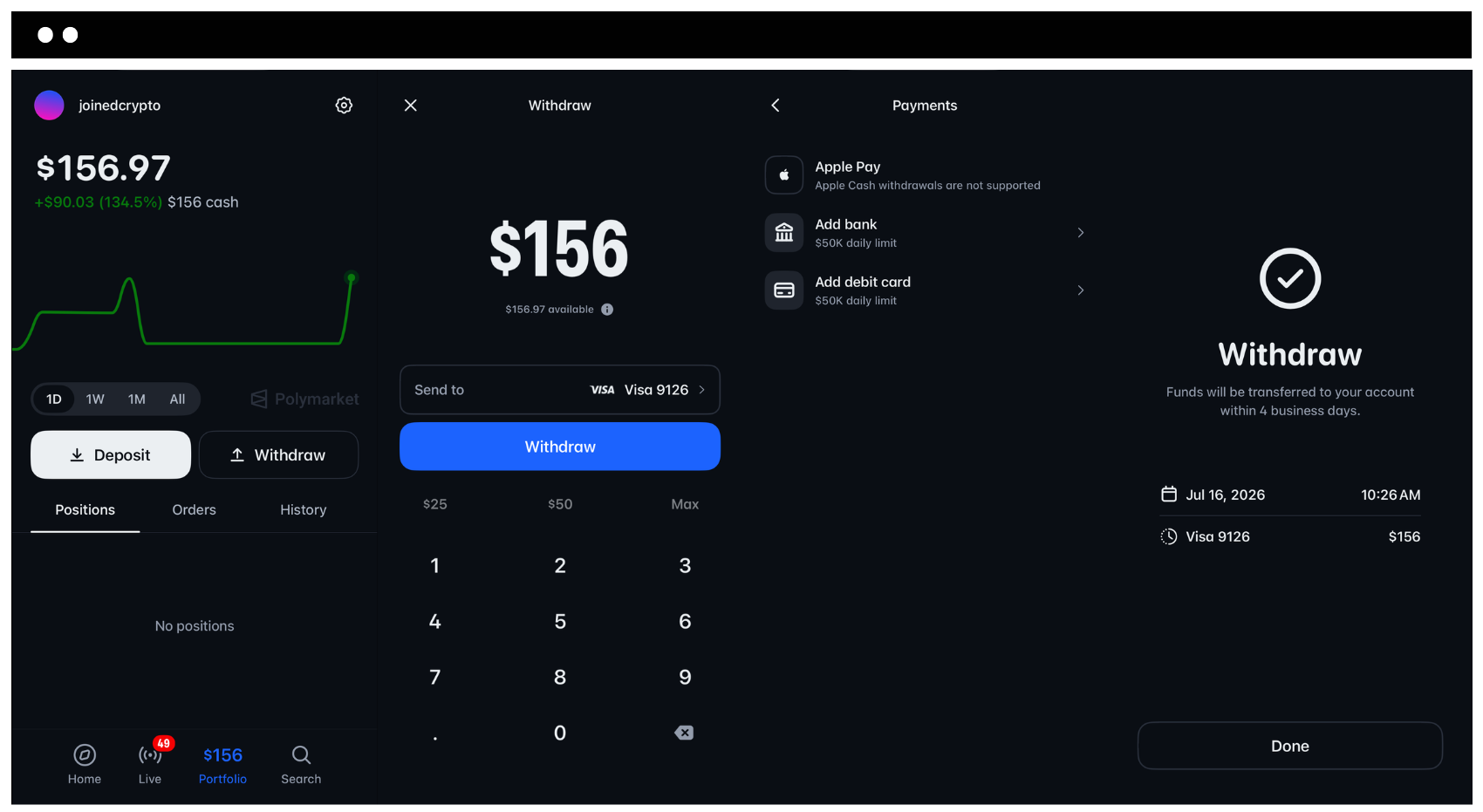
With that being said, I did score on Polymarket a little over $150. And it's now sitting comfy on my account after cashing out.
If you decide to copy trade me, good luck. That "Joined Crypto" handle will remain dormant, and was necessary to properly write this article.
What happens if I lose?
If you lose, your balance goes down. Pretty straightforward.
If you happen to be down bad, like I’ve been before, make sure all your prediction markets are managed with a random alias on the username.
If you want to show off your losses, that’s really up to you.
If you just wanted to give it a shot, just remember that a large chunk of users lose. As long as you are cool accepting that, then be my guest.
How does Polymarket make money?
Through fees per transaction. In banking and crypto, we abbreviate them with “txns”.
Chances are you will run into these terms in your alpha chats, or whatever random place you get your market alpha.
Getting Started with Polymarket
Well, this post covered quite a bit about it.
By now, you for sure should be able to explain how does Polymarket work. From your closest bodega neighbor, work colleagues, partner and beyond.
Although, nothing here matters without action. Whoever is telling you to test anything in crypto with more than $10 should be avoided, because all you need to do is test the platforms we showcase here in Joined Crypto without any speculation in mind.
Again, our goal here is to educate users, and expose them to winning products.
If you are into chart watching, this is not the place to be.
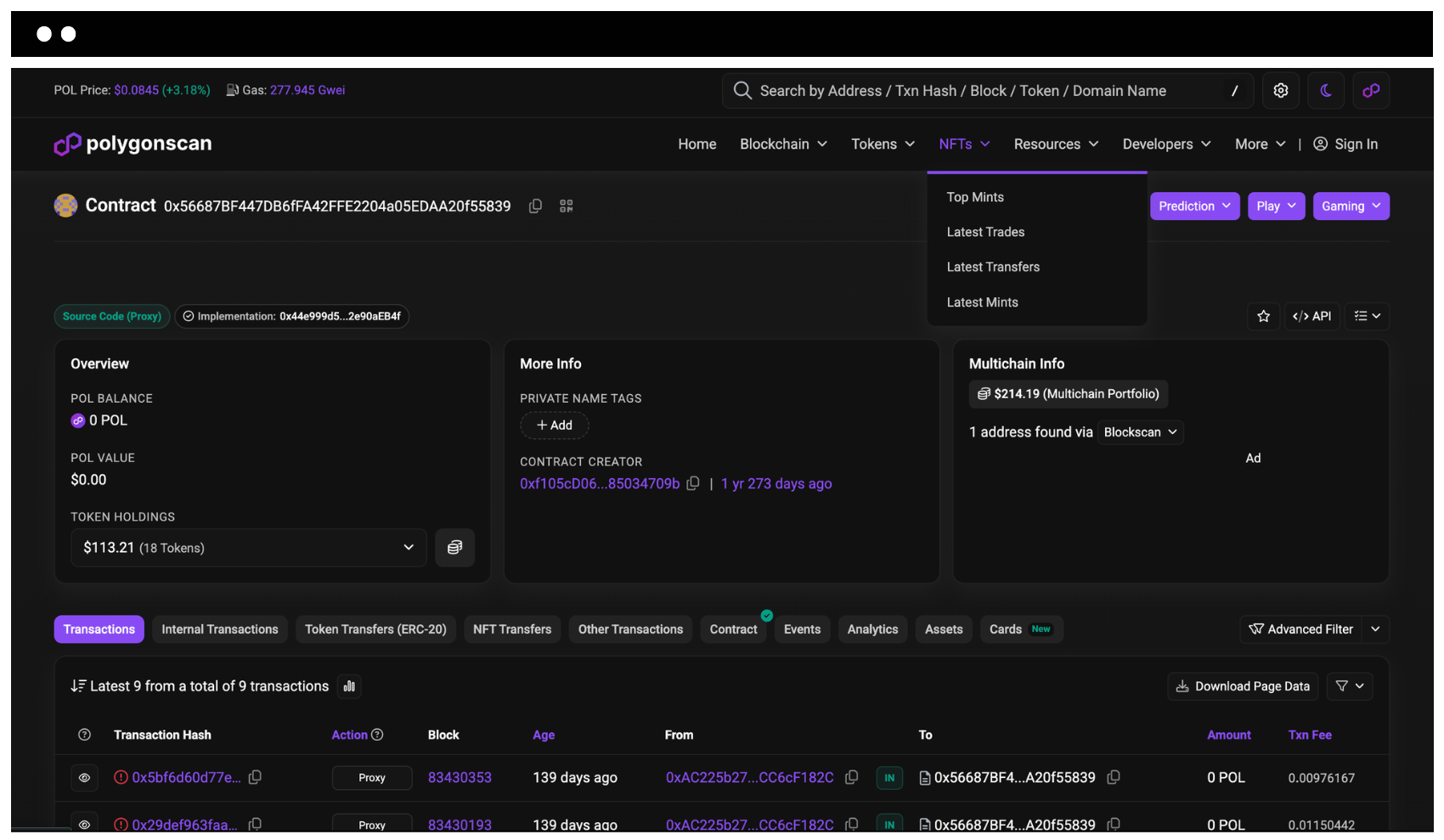
With that being said, you can also understand how these platforms work by monitoring a wallet of your choice.

Note above, this is one of the top Polymarket users, along with their wallet. With a bit of imagination, you can map out how the platform works.
Not only for Polymarket, but for any crypto related product, period. Remember, you are only one block scanner away from finding any wallet you like.
Oh, and if you plan on testing copy trading, expect the person you are tailing to dump on you.
No person in the world that gets copy traded will ever mention a thing, because that was your choice to buy right after they did.
Think about it, they bought before for a better price most likely, else why would you tail them?
Again, if you copy trade, the inevitable will happen.
My only advice is to explore markets you truly have a competitive advantage on.
With that being said, this article covers plenty to understand Polymarket, and how it works.
"Remember, Polymarket is everywhere now, and even your grandma will be reading about it."
From predicting elections, to the golden globes, and beyond.
Prediction markets are a crypto native category, built by no other than Polymarket, and Shayne Coplan.
Disclaimer: Some links in this post are affiliate links. When you click through and make a trade or sign up, we may earn a small commission at no extra cost to you. We only recommend platforms and tools we actually use and believe will help you navigate the crypto markets more effectively. This helps us pay the bills and keep delivering the alpha and market insights you rely on. Thanks for supporting Joined Crypto!






.png)