If you have ever bought crypto, then you are likely engaged with a crypto exchange. These are the Coinbase, Binance, Gemini, Bybit, OKXs of the world.
Exchanges open the door for all things crypto and consumer trading.
Without these companies, you wouldn't be able to trade fiat (cash) for crypto and back, or swap crypto for other crypto.
As of late, crypto exchange businesses have a suite of services beyond trading. Beyond spot, these include staking, perpetuals, futures, and more.
Growing a crypto exchange business is no easy feat. That's why I had to research top crypto exchanges, tune into Crypto Twitter (now Crypto X), experts, and beyond.
To create this detailed write-up, I also had to think back to my time working with product leaders at BlockApps, a Layer-1 EVM blockchain. And also Cogni, a neobank with a self-custody, multi-chain wallet.
I do come from a growth background, but after thoroughly researching this topic, I'm confident this writing can move the needle. In this case, your crypto exchange business.
With that being said, let's break down the data, examine the technical elements required to scale a crypto exchange, and review some of the best marketing tactics in the crypto world.
There's a good chance some of these items are not on your roadmap, so let's get to it.
This blog covers plenty to move the needle. Click on the links below to quickly jump to any of the 10 sections:
- The Data
- Cryptocurrency Exchange Product and Infrastructure Optimization
- Marketing To Expand Revenue Models
- Market Research
- Revenue Streams: How Exchanges Actually Make Money
- Scaling Customer Support Without Exploding Costs
- Blockchain Financial Institutions Leading The Way
- Complete KPI Framework For Scaling Crypto Exchanges
- Common Scaling Mistakes To Avoid
Alright, let's get to it.
The Data
To hone in on how to scale the crypto exchange business, take a step back and check what the data has to say about the top exchanges on the market.
To do so, focusing on the number of assets and inflows is a good idea to narrow down the best in the market.
According to DeFiLlama, the ones that run the market today are Binance, OKX, Bybit, and Robinhood.

The above data is missing Coinbase, which happens to be the largest exchange in the United States, and a reputable north star to also consider. Hyperliquid is another strong name to consider.
These cover all trading basics, and it's where real trading behavior happens.
Cryptocurrency Exchange Product and Infrastructure Optimization
Again, I come from a growth marketing background, so I had to go deep on this section to understand the ins and outs of exchanges, referring to industry leaders and some intense digging.
Without further ado, let's get to it and learn how to scale crypto exchange businesses from a product perspective.
Architecture For Scalability
Understanding monolith exchanges and those with microservices is quite easy.
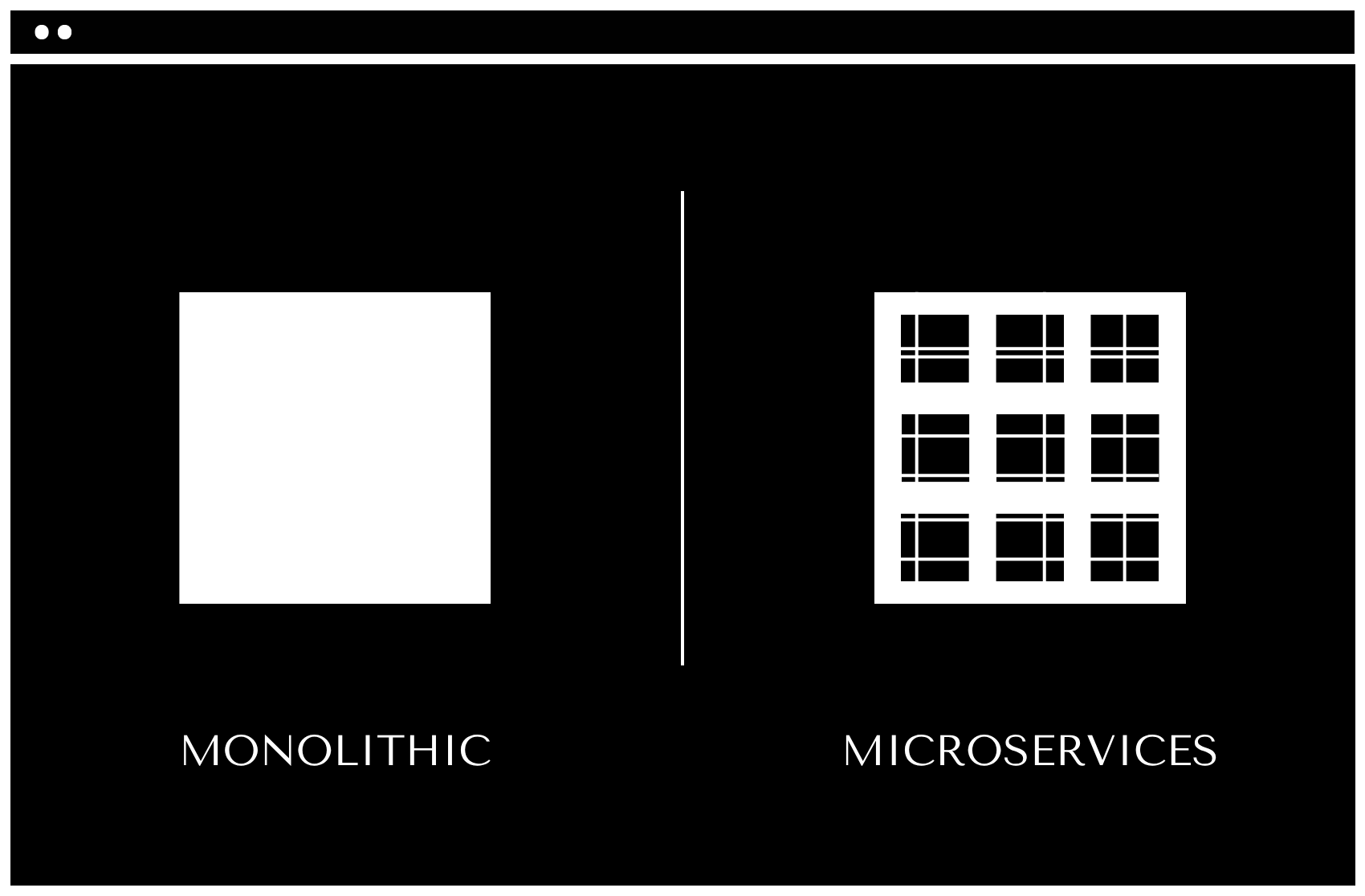
Monolith exchanges operate perfectly at an early stage for about 500 users, or so.
Exchanges like Coinbase, Kraken, dYdX, and others offer microservices, typically with advanced trading features well beyond those of a single monolithic exchange. These exchanges upgraded their stack constantly and are market leaders for a reason.
Avoiding Cryptocurrency Exchange Scripts
A lot of early founders opt for quick GitHub plays to spin a cryptocurrency exchange platform script or a cryptocurrency exchange clone script to launch quickly. Even though a cryptocurrency exchange script or cryptocurrency trading script can accelerate your roadmap, the reality is that growing a crypto exchange sustainably requires much more than just some pushes on prod and mainnet.
In summary, cheap scripts fail. Building poor financial products can lead to serious legal repercussions. Might as well take your time building a quality product than dealing with the law.
Exchanges With Advanced Trading Features
Anything beyond that requires a more robust infrastructure, one with easy-to-implement architecture modular upgrades designed in-house.
Picture your exchange running at full capacity, with orders freezing, delaying withdrawals, etc.
These are things that can make or break your user base.
Basically, mayhem, and with that follows regulatory scrutiny for disrupting existing users, so plan compliance early, or scale your services accordingly.
In summary, weak infrastructure crashes can easily be the deathbed of any exchange. If the product fails, there is no marketing campaign that can save you.
If you don't believe me, take a look at the Mt. Gox case that some claim could have taken down Bitcoin (BTC).
Infrastructure Components
There are about four components that most exchanges rely on. It's not as complicated as you think, at least the skeleton of it.
There is the frontend, which essentially covers all UX and UI elements of the product site.
Then you have the trading engine, which matches buy and sell orders in real time.
For centralized exchanges (CEXs) like Coinbase, for example, they keep their own order books internally, matching sellers with buyers on their own, which explains why some prices can differ among exchanges.
For most decentralized exchanges (DEXs), you will see the inclusion of oracles like Chainlink or Pyth, which essentially funnel live prices to ensure they are not exposed to arbitrage.
Thinking to include wallet infrastructure early is a best practice, since almost all top-tier exchanges include the possibility to trade with non-custodial wallets, along with depositing and withdrawing funds from not just their bank accounts, but their crypto wallets too.
Database Management
Database management and scalability are key elements of every new exchange.
Just like any SaaS business, how you handle your data storage is everything. Data-driven exchanges may have what it takes to build value to gain more users, but they also must maintain an airtight regulatory compliance protocol to protect their order books and customer data.
In terms of data types, you can easily break it down into two types.
Hot data typically relates to live order books, customer balances, and price feeds captured internally or through oracles. Essentially everything that needs to be accessed instantly. On the other hand, we have cold data, which is also quite sensitive, like user lists, trading history, and audit logs.
Not having the proper security measures and backups can translate into compliance issues. Whether you already run a large exchange or are looking to build one, this is another make-or-break element you cannot skimp on.
Dedicated Servers vs Cloud Hosting For Automation Power Scaling
This one is very straightforward. The vast majority of exchanges operate with an auto-scaling system through cloud servers, such as AWS, Google Cloud, Azure, and more.
This is the only way to ensure you can scale along with your user growth.
You can also opt to have a blend of dedicated servers to gain a competitive advantage to run your exchange orders faster, but in terms of scalable architecture, you might face challenges if your traffic spikes heavily.
If the latter were to happen, you have to ensure your dedicated servers can sustain it, which might be tedious or can end up being a sunk investment in the long run.
Safety Standards
The most straightforward thing you could do at this stage is to have clear communication detailing the risk of holding or trading assets with market volatility.
"I would personally like to see more exchanges offering stablecoin-related incentives than volatile assets that can impact new users, although to each their own."
It just does not make sense to start a new user, your grandma for instance, with a volatile asset. To serve a higher total addressable market (TAM), you must adapt to the masses, not to the few.
Especially now that you can do plenty of purchases using stablecoins.
Users should also be aware that centralized exchanges face local scrutiny that can impact their ability to withdraw or trade assets at any point.
For instance, I had a friend from Venezuela who moved to the Netherlands, just to find out his small and humble portfolio was locked due to diplomatic issues between both countries.
His non-custodial crypto wallet assets, on the other hand, remained available, allowing him to trade on DEXs at least.
Any modest data leak from an exchange is enough to trigger a long list of regulatory flags, which are followed by penalties that can break your entire business.
Security Anti-Money Laundering (AML)
Anti-money laundering (AML) is a key component across the finance industry, from banks to neobanks, exchanges, and especially most fintech products.
Exchanges offering limited KYC (know your customer) protocols through their onboarding can end up facing steep issues during the short and long term. The more personal data you have about your users, the more you can leverage compliance to defend your real users and business.
Many early-stage platforms will skimp on compliance tools or delegate terms and conditions. By the time it hits the fan, rewriting compliance logic is a tad late, and quite expensive to say the least.
Regulation mandatory items should never be deprioritized, especially not in finance.
It's no secret that bad actors only want one thing: money. And it's sickening to see the sophistication these fraudulent groups have daily.
"I once ran a referral program campaign with a product that had pretty robust KYC architecture, and yet somehow we got tons of individuals trying to unethically take advantage of it, along with numerous fraud alerts from key AML tools like Galileo. Folks were gaming terms and conditions, plus blasting them on private Facebook Groups, harming the business."
If you are new to finance or fintech, or at least have a regular bank account, please trust me when I say that folks are working to break financial AML protocols at scale.
For fraud and on-chain monitoring, both TRM Labs and Chainalysis are worth checking out.
From creating thousands of user accounts or super small deposits in seconds, to starting early withdrawals from products that give you an allowance once a deposit or wire is on the way.
The moment your exchange launches, be ready to sustain your weight and strengthen security accordingly.
If you are one of these folks doing fishy activities, just know that I dislike you, along with the entire industry.
Load Management With Sharding
To keep it simple, load balancers and sharding are just standard ways to distribute user spikes across the platform. If there is a spike in BTC, then trades for ETH or other assets are not impacted, along with withdrawals, sign-ups, etc.
Volatility typically brings wild times in social, especially X and Telegram. Any downtime on the platform can burn an exchange's reputation. Basically, don't eat more than what you can chew.
Order Matching Engine
This is by far the one, if not the most important, element of your exchange. It has to match real-time buy and sell orders, benchmarking or exceeding market volume to trade smoothly.
Order matching delays downtime typically deters volume traders, which ultimately impacts your competitiveness and long-term sustainability.
Again, the logic is simple. The faster the better, and top it off with good UX.
Liquidity Strategy
Internal vs. External Liquidity
At first, an exchange can front the liquidity pools to allow trading, but as things scale up, exchanges have to rely on market makers and aggregators.
Decentralized exchanges (DEXs) depend on Automated Market Makers (AMMs) like Uniswap or Curve to replace traditional order books with liquidity pools and algorithmic pricing.
We made a pretty good list of market makers you can rely on below.
External liquidity from market makers is key for exchanges to sustain volume on their order books. They need to pay fees to these providers to have market depth, at least while they build their own internal liquidity strategy.
The idea is to always have liquidity for all assets listed, ensuring the least amount of slippage in between orders. Basically, the order price should be the same as the one of a completed order.
"If your spot does not match the competition, expect actors exploiting arbitrage opportunities in your exchange."
This is also where even key modern exchanges fail, so if you list an asset, better have the liquidity to back it up.
Market Makers Churn Revenue
At the end of the day, market makers do not work for free. They commit to holding and providing liquidity for certain assets, and they make yield by providing exchange liquidity for said assets.
Liquidity KPIs to Track
Pay attention to your price spreads, ensuring that they're at market rate. A tight spread of 0.05% or less on major pairs, for example, is always best.
"Avoid having price spreads that are not competitive and ultimately impact your users."
Order book depth is also quite important for volume traders. Picture layers of prices, where there is just 2% of the supply at a certain price, then the other tokens purchased are at a higher scale, and so on.
A volume trader that buys with low order book depth can jack up the price substantially, which can ultimately trigger volatility or sell events, impacting their investment.
Imagine you made a big volume order, filled the order book with just 10% of the investment at a lower price, for then for you to find out you were pushing the price higher almost instantly, eating your investment at a higher rate.
Just because you spiked a chart does not mean other holders are not going to dump on you.
The latter can push volume traders elsewhere, a negative for any worthy exchange.
Perpetual (perps) or futures markets also measure volume-to-open-interest ratio. If the exchange just has stale orders with no new orders flowing in, it's a clear sign it's not scaling. You want a healthy volume of orders being made and closing consistently. Else the exchange can force liquidations and ultimately shut down.
If you are new to perps, like I was a while back, check this perpetuals exchange simulator to understand how it works from a user perspective.
And if you need some motivation from what I consider the north star product of perps today, check how Hyperliquid works on the post below.
Marketing To Expand Revenue Models
First, let's start by saying that there is a great number of crypto marketing agencies in New York City doing a great job, and all around the USA, of course.
I've been lucky enough to work with some and gained some valuable crypto marketing experience myself over the years.
"Through time, I've managed to note how crypto exchanges promote themselves and the levers that bring in inflows in today's market."
If you were to take note of my personal exchange north stars, I'd include Coinbase, Binance, OKX, Bybit, Robinhood, dYdX, and Hyperliquid.
Let's dive into some of the core elements I consider key to growing an exchange today.
Market Research
If you were to start from scratch, I'd invest time and resources in developing comprehensive market research to pinpoint opportunities to penetrate the market and the customer personas behind it.
For instance, spot trading might already be too common a service to compete with, but other growing Layer-1 chains might offer opportunities for it.
Or maybe it's best to compete where the user volume is, and divert into a more specialized product like margin trading and perpetuals.
Perhaps it's best to go and build a centralized exchange (CEX) instead of a decentralized exchange (DEX).
These questions will likely get answered with proper market research.
Scoping An Opportunity Through SEO
The idea here is to go into the docs, typically documents living in subdomains, and see the keyword with highest volume, then optimize your product to gain a competitive advantage on those terms.
Finding A Super User
During May 2025, an interesting character named James Wynn went viral for putting a 40x $30M+ long on Bitcoin on Hyperliquid.
A story that became more epic as folks realized he made his fortune by longing $7k on $Pepe and bagging a $25M+ profit.
You see, in my opinion, James Wynn is not the only main character in this story. It's Hyperliquid.
Tons of folks followed to try to match James' success, venturing into perpetuals and futures for the first time.
Hyperliquid already had a massive following, but the James Wynn story really made people dream.
"People were clearly thinking, if James Wynn did it, I can do it too."
Months went by, and Alexis Ohanian dropped a knowledge bomb that resembled the story right away.
The concept of a company, a brand, building a superfan, not just an influencer.
James ultimately lost his long position and most of his money on that trade.
You can come to your own conclusions if James or Hyperliquid colluded or not, something this article has no interest in.
The lesson is the story of a superuser, beyond what a traditional influencer is today.
Who will be the James Wynn of your exchange?
Crypto Exchange Marketing Channels
The channels I've seen the most on by exchanges include X, TikTok, Meta, and Google.
LinkedIn could also be an interesting choice, especially if an exchange is looking to grow its (B2B) enterprise business.
Performance And Compliance
Social media is a key channel in crypto, with X, TikTok, YouTube, and LinkedIn capturing most of the traffic.
Google and Meta are also great channels, but face strict restrictions when it comes to paid advertising. They typically require certificates for most companies, something we will dive into below.
As we can see from SimilarWeb data, search dominates. Although, social traffic is still important since they include many PPC and targeting avenues.

Just note that the options narrow down based on your local regulations.
Compliance Requirements
As an exchange, compliance readiness is key to success, especially if you are considering launching crypto ads on popular social and search channels.
X
The channel with the heaviest crypto users is X without a doubt. Formerly known as Twitter, it grew a vibrant crypto-focused community that some claim as "Crypto Twitter".
At Joined Crypto, we call it "Crypto X".
If you were to target the heaviest retail crypto users via paid ads, then you must submit an application.
The application is subject to geographic restrictions and differs for either of these products or services:
- Cryptocurrency and DeFi products and services
- Non-fungible tokens (NFTs) and related products
Google certificates are necessary for all things Adwords, YouTube, and UAC.
To get these in place, you need to fill out a form and wait for approval.
These apply to the following:
- Cryptocurrency exchanges and software wallets
- Cryptocurrency hardware wallets
- Cryptocurrency coin trust
- Complex speculative financial products
I've done it in the past. You can expect an answer in a week or so.
Meta
To advertise anything on Meta, you will first need to open a Meta Business Suite.
Once done, you must apply to launch cryptocurrency ads before getting started.
The Meta certifications are needed for any of the following services:
- Cryptocurrency exchanges or trading platforms
- Cryptocurrency borrowing or lending
- Cryptocurrency wallets that offer additional services
- Cryptocurrency mining
- Cryptocurrency investment
TikTok
An important channel, growing at the same or faster pace than its counterparts. TikTok has a thriving crypto community, siloed from those on X. The latter is at least my personal observation.
Yet it does have strict and lengthy restrictions for exchanges to review before considering launching paid campaigns here.
Although LinkedIn allows exchanges to advertise, they also have strict requirements. Only ads for centralized exchanges (CEX) are allowed. Ads for decentralized exchanges (DEX) are not allowed.
Also, staking services can't be advertised.
Affiliate Program
To entice the best users to share the exchange and scale your user base, an affiliate program is highly recommended.
The concept of a sales funnel is outdated and needs to be rethought as a flywheel.
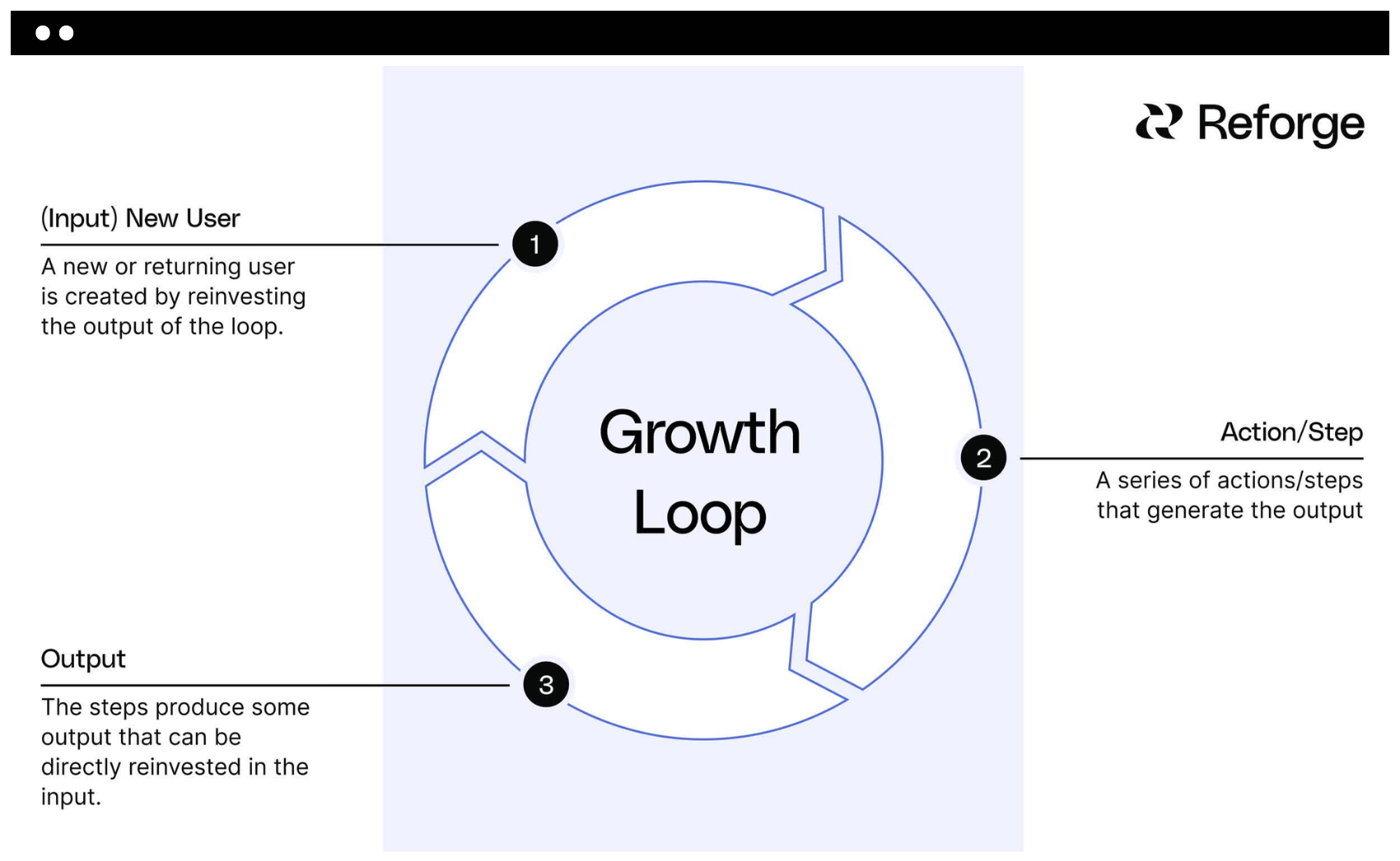
Product and marketing must aim to build a product and a UX that produces this outcome when a power user refers to the product through word of mouth.
Not only is a great affiliate program needed to succeed, but you also need a world-class product and serious fraud monitoring.
Benchmarking the best terms and conditions and stress testing them is key to avoiding any pitfalls.


As of today, these are some of the best affiliate programs in the United States.
Influencer UGC CPM Led Campaigns
A cool platform to do this is spindl.xyz, which works similarly to Mixpanel, where you can map out all your desktop and in-app events to optimize your platform.
On this very same platform, you can also run influencer-led UGC campaigns, where you pay the influencer per view or conversion generated.
This is part of the same playbook launched by popular Web2 companies like Clay.
Exchanges scaled organically tend to build higher user trust.
Flexible Compliance Strategy For Global Expansion
Running a global exchange is a serious operation, especially from a compliance side.
Regulations like the GENIUS Act (US) must be incorporated at an early stage.
To start new operations, it's best to keep tabs on geographic areas where new wallet creation is happening, where the compliance effort is worth the investment.
And it also makes sense from a business and growth standpoint. Southeast Asia, Latin America, and the Middle East are typically more open to opportunities in contrast to developed crypto nations like South Korea, the EU, and the United States.
Ideally, you would map out which countries have similar jurisdictions and scale around those first, leaving those that have more complex compliance and economic challenges.
Airdrop
Not that many exchanges end up giving airdrops, but if there is one that stood out is probably dYdX's airdrop, valued at $2B at its all-time high price in September 2021.
Pretty outrageous, if you think about it. We are talking about folks getting 6-7-figure airdrops for just using the platform.
These numbers seem inferior to today's numbers when you compare Hyperliquid's $7.5B airdrop in November 2024 (valued at peak token price), where top percentile folks, the top 0.3%, received airdrop sums of over $260k per wallet.
All this for just using the platform!
Even employees won big.
The fact that this happened opens the door to any exchange to do the same in order to entice platform usage.
Only increasing user growth with airdrops can be costly, and the moment it stops, user growth stalls.
OOH Campaigns
These are out-of-home campaigns, essentially billboard and classic poster placements.
You will find these by the highway, on the subway, or posted up guerrilla marketing style.
These are great to capture local markets and even generate UGC content on relevant cities.
A billboard in San Francisco, or a large column billboard in Times Square, can entice others to take a picture or video and share it along with their own.
It elevates your reputation, and it's key to dominating local markets. Although I would not say it is completely necessary to grow during the early stages.
Revenue Streams: How Exchanges Actually Make Money
The number of revenue streams really depends on the feature stack the exchange provides. Whether it's market orders, limits, staking, perps, launchpad, or anything else you see out there.
These tools provide different revenue streams, as you can imagine. Let's take a deep dive into some of the options available.
Trading Fees: Maker-Taker Model
It's not as complicated as you think.
You can be a maker, which means a person who is committing an order in the future to either buy or sell. Limit orders are a good example, and exchanges typically take a smaller fee for these. The best part is that these keep exchange order books full, which ultimately creates a predictable revenue model.
On the other hand, you can be a taker. It's basically someone who completes an order instantly. Perhaps the most common practice among new folks, and very straightforward. These typically generate higher fees for exchanges.
Without a doubt, fees are a straightforward way to generate revenue, but take into account that there are revenue streams that are not customer-facing. Low fees tend to be a key element for growth for every exchange. Without it, churn is inevitable.
When I see trading fees scaling beyond market rate, I tend to question the sustainability of the exchange. A red flag for many users.
At the end of the day, customers want good service while paying the least possible, just like in every industry.
Take Coinbase, for instance.
You can save quite a bit on fees by using Coinbase Advanced instead, which is free and available for everyone. Or Robinhood, which also offers trades without fees. These are clear examples of how competitive the current market is.
Now you are starting to see protocols like Binance or Hyperliquid offering staking options if users do so with their native token. These end up unlocking trading fees, access to new features, access to exclusive memberships, events, and more.
You will notice most global trading platforms have different fee structures, nothing you can't look up or do a quick data pull to see what you are against.
Some exchanges might expand beyond a business-to-consumer model, adding white-label 3rd party exchanges, affiliates, and partners to leverage their infrastructure and their own programmatic fee structures. The latter then becomes a new revenue stream for the main exchange provider via commissions API access.
Withdrawal And Network Fees
This one is pretty obvious.
Most exchanges charge an exit fee more or less when you withdraw funds, and it can differ depending on how fast the user needs it and where it is being sent.
To complete user deposits and withdrawals, most exchanges use Plaid to connect your bank account to their product. This tool verifies ownership, checks balances, and conducts transfers.
If you have ever connected your bank account to a tool that handles finances, chances are you used it. Transferring to or withdrawing money from Coinbase is no different than depositing to Robinhood, or even betting platforms like DraftKings.
Also, different types of transactions might take longer than others. Consider national or international wires, for example. Or from exchange to exchange.
Again, the lower the exchange fees are, the better from a retention perspective. Making it easy to deposit and withdraw is an absolute must as well. There's no way around it, and anyone that has used an exchange knows it's basically mandatory to have these features.
Staking And Yield Products
Staking is a key component to generate revenue as well, with exchanges shaving a percentage of a user's earnings. A commission, basically.
Allowing users to stake stands as a solid retention strategy, since it reinforces the exercise of holding assets for an extended period of time, with predictable yield, and diverting them from potentially damaging frequency trading.
In my opinion, staking should be one of the first steps to onboard new users after they deposit to buy their first crypto or digital assets, especially through non-speculative assets like Bitcoin, Ethereum, or even Solana.
Ramping users from deposits, buying stablecoins, leveraging yield through staking, and hopefully doing so for a couple of months seems ideal to me. This can be accompanied by reward-based lessons teaching newcomers to learn new concepts and benefits.
A pretty cool way to instill a culture of long-term "hodling" and believers, not just users chasing charts all day.
The compliance part of staking is still an ever-growing conversation, and distinctive to its geography.
Perpetuals And Futures Funding Rates
Let's keep it simple: again, you need deposits, and provide multi-chain and asset support to really enable a good perps exchange.
Having stablecoin support at this point is basically mandatory. Also, listing tokenized stocks and RWAs to trade commodities, and providing users access to private rounds is key.
Without "attractive", and in my opinion, absurd leverage options, most perp exchanges can't get traction.
I just find it hard to believe that starting a perps journey on 50x leverage is good for onboarding.
It's not that perps are a bad product feature. It's just that it is ambiguous for new users entering the wild world of finance. The user horror stories are out there for anyone to see.
If you run an exchange that randomly tanks assets for "security", "product", or "liquidity" failures, and triggers cascading events that liquidate your user base, then you are part of the problem.
I wish I was in a position to comment further on this as a product expert and not just growth. As someone who has used perp exchanges like Hyperliquid, the market leader, the road for mass adoption is still a long one.
Hyperliquid's token buy-back mechanism is being talked about positively, which is great. But I'd like to also see more successful user stories for exchange perps to really take off as I envision.
If you are new to perps and need an example, peep our perps demo below.
Listing Fees And Ecosystem Revenue
Listing fees are the fees paid by the project team or community to list the token on an exchange. These can easily stack up to $50,000 per listing. Otherwise, it can be done for free if the token has sufficient momentum.
These are called Initial Exchange Offerings (IEO), and are done by exchanges with launchpad capabilities too. The upside is that the exchange gets a buy-in early on the token before it ultimately takes off, or at least we hope.
Just by getting a grasp of the volume that launchpads and small exchanges are doing, you can get a good forecast in terms of how much liquidity of said token needs to be captured to allow it to trade properly, collect fees, and think beyond just the listing fee.
Obviously, listing every shit coin made can cause serious reputation damage. So be smart about what you list and protect both your exchanges and our beloved crypto ecosystem.
Scaling Customer Support Without Exploding Costs
As someone who had firsthand experience working as a customer support agent as an intern during my college career, I can tell you that this department is one of the best to source new ideas for product development.
If your PM is not picking up on what people are complaining about, which will be the vast majority of your tickets, and the other tiny bit of good feedback, you are most likely going to be building laggard features in contrast to your competitors.
Regardless of what innovation looks like today, with or without AI, the goal is still to keep your tickets low in the first place, and have product growth loops that help your product improve and keep your customers.
AI-Powered Tier-1 Support
In my opinion, this is where compliance tools can pull their weight.
I once read that ticket volume outpaces user signups. And I've found it to be true ever since.
Think about it. If your onboarding is not converting, you are spending tons of customer support efforts tackling items that won't impact your bottom line, transacting users.
Dealing with KYC (Know Your Customer) is, again, a massive item.
Decentralized exchanges (DEXs) have a massive advantage because they can onboard users with a crypto wallet.
On the other hand, centralized exchanges (CEXs) have to rely on KYC compliance logic that's developed in-house or through providers like Plaid, which supply these services for Web2 fintech companies.
These tools are obviously using AI to optimize this.
I find it to be a key bottleneck to tackle, since you should prioritize support for revenue-generating users, not the infinite amount of fraudulent signups fintech companies have to endure.
But remember, if your customer support manual operations fail, then your AI workflows will probably follow the same fate. AI, in my opinion, will always have to be led by folks that have walked the walk before, especially in finance.
Tiered Support Structure
Straightforward concept: support can be an added feature for a user or part of a bundled package.
The 'Free' vs. 'Pro' tiered plans you see in most subscription websites today explain it all.
Volume traders are obviously more interested in these packages.
Community-Led Support
Forums, Discord, Telegram, and even X are great places for users to interact with each other. Even though the social channels can prove useful, these can also surface issues in the platform or attract scammers. Might want to consider a cool, hilarious, and smart social media intern to cool the air when things get hot.
Bounty programs for bugs can also catch optimization items and patches to fix for the product. I consider these to also be community-led efforts, because it typically entails a few white hat hackers or bounty hunters for the program to take off.
Blockchain Financial Institutions Leading The Way
If you need help scaling a crypto exchange business, some experts can help you along the way.
As mentioned before, a product expert from sFOX collaborated on this article, so it might be a bit biased.
Let's check out what these companies are best for, all best-in-class at what they do.
I made a guide on how to make your own memecoin. Now, imagine it blowing up, and one of these heavy hitters starts buying in volume, then selling it to a top-tier exchange.
The cool thing about crypto is that you can see these players, including exchanges, buying up supply before their marketing announcements.
From protocol tokens to memecoins, exchanges need to supply trading features for what the market demands.

Wintermute
One of, if not the best, liquidity providers in my opinion. These folks provide an extensive array of services, but I am particularly fond of their UX and what their liquidity service seems to offer.
Beyond looks, they already work with exchange powerhouses like Coinbase, Binance, Kraken, OKX, Backpack, and more.
They operate as an algorithmic market maker covering both CEX and DEX venues, as well as DeFi. Players like Uniswap, Orca, Raydium, and dYdX rely on their liquidity pools.
If you plan on including DeFi features on your exchange, you can also count on Wintermute. And if you are building a top-tier product, their venture arm is also available.
My top pick.

sFOX
Founded: 2014
I happen to have a good friend of mine working here, Simon Grundfeld. A person I admire a lot and gave me a chance before.
Nonetheless, sFOX is here on its own merit, and has been ramping up competitively ever since their start at Y-Combinator.
sFOX stands for San Francisco Open Exchange, and currently supports over 59+ markets and trading pairs, in this case, from BTC to ETH, SOL, XRP, etc. Giving users smart routing and price accuracy from a market maker standpoint.
Their cross exchange liquidity APIs for institutional traders and exchanges to aggregate order books from multiple venues are quite interesting. Basically, pooling liquidity for you from any over-the-counter (OTC) desk that trades the assets you need, anywhere that it trades, essentially.
It operates without building separate integrations for each one. Dealing with multiple exchange APIs can lead to bugs and more intensive maintenance, so dealing with one API call simplifies things quite a bit.
They are also showing traction with their dark pools service, where large institutions can do large trades from private trading venues without displaying public order books. This allows them to complete the order without getting front-runned.

FalconX
Founded: 2018
This prime brokerage is one of the strongholds when it comes to institutional digital assets. They provide services to establish spot trading, derivatives, custody, lending, and financing.
This is exactly what institutions need to scale a crypto exchange business.
Their clients include Standard Chartered, BTG Pactual, Mercado Bitcoin, sovereign funds, and 600+ institutional clients worldwide.

Talos
Founded: 2018
A top provider building institutional trading infrastructure since 2018.
When it comes to their strongest product, it is their end-to-end trading platform, which connects over-the-counter OTC desks directly with end-clients via a single entry point, similar to how FX markets operate.
Clients include Nubank, a very large financial services platform. They also successfully integrated with exchanges like Binance, Coinbase, Cumberland, and Galaxy.
They also have a growing global banking and hedge fund space clientele.
Everything with Talos seems to check out on my end. A name to keep an eye on in the crypto industry.

Fireblocks
Beyond liquidity ops, exchanges rely on infrastructure service providers like Fireblocks. This allows crypto to safely circulate between wallets, exchanges, and institutional counterparties.
It's particularly useful when it comes to hiding private keys or the numerous wallets your exchange needs to custody their liquidity.
Coinbase, Galaxy, BNY Mellon, and 1,800+ financial institutions are serviced by Fireblocks.
Imagine settling orders faster without complicated manual confirmation orders. The amount is so massive for manual ops that errors are almost inevitable. A confirmation can easily be spoofed and drain your digital assets, which is logical.
Again, the weight of a compliance issue can be catastrophic. Might as well go all in building the best product possible, and compete with the best stack possible.
Complete KPI Framework For Scaling Crypto Exchanges
As someone who worked for a neobank and other fintech startups, I can tell you firsthand that regardless of the fantastic vision quest the C-Suite has for you, KPIs and OKRs will definitely tell the story in the end.
"Did you benchmark the entire product stack from your competitors? Did your growth CAC drop below the market rate?"
Nobody cares. Especially not your customers.
None of this matters really if users are not benefiting from your product and generating revenue for your business growth.
In summary, metrics will essentially tell you if the exchange has any product-market fit (PMF) at all.
Growth Metrics: Deposits, Volume, Transactions
Coming from a neobank myself, I can tell you that banking and exchange metrics do not differ at their core. Beyond just gaining new users and retaining them, you need them to deposit with transactional volume to boost revenue.
Collateral And Margin
In terms of perpetuals, you are looking at the collateral you put in to make your long or short. If you get liquidated by your exchange, your margin goes with it.
Leverage
The multiplier that sets the true value of your position. Anything above your collateral is what the exchange is lending you.
Notional Value
The actual size of your position, after the leverage multiple in the order.
Mark Price
The actual price entry for your order, basically what the user sees in the chart. This is where oracle data feeds come into play.
Liquidation Price
The price at which the collateral put on a position cannot sustain the losses.
Maintenance Margin
An exchange may set a minimum collateral needed. Otherwise, the order can be closed. So, in some cases, being 10% away from the floor can trigger a liquidation. It depends on the exchange and the asset being traded.
Funding Rate
Took me a while to understand this one, so bear with me.
If an asset on perps is trading higher than spot, then it means that there are a lot of longs open, and to keep the same price as market, or spot in this case, then shorts get a cash or asset bonus to their call.
The opposite happens to the longs' collateral. They lose money from their collateral.
This encourages shorts to increase and balance the chart.
Exchanges define intervals to distribute this funding rate per asset, typically on a daily basis, balancing the perp asset price to spot.
The important thing to note is that the exchanges do not earn any revenue from this. Take Hyperliquid, for instance.
Collateral / Margin: The deposit that backs the position. If you get liquidated, this is all you lose.
Leverage: The multiplier. 10× on $1,000 collateral = $10,000 notional. The exchange basically is lending you $9,000.
Notional value: The actual size of the position, so it's the collateral multiplied by the leverage. Fees are charged on this number. Your fees can quickly shave down your collateral. The higher the leverage, the higher the fee.
Mark price: Oracle-fed real price. Top providers include Chainlink and Pyth.
Liquidation price: The market price at which the exchange liquidates your position, earning your collateral.
Maintenance margin: Minimum collateral to keep a position open. As mentioned before, this could be when you're 10% away from your liquidation, not necessarily obvious at first.
Funding rate: To ensure the perps market price matches the spot price, hourly payments are distributed between long and short traders.
The exchange does not make anything from this.
If you are into arbitrage, or trying to figure out cool ways to make a buck online, have a look at delta-neutral funding rate farming.
Unrealized PnL
Basically the profit without closing the order. Not yours until you close it, or set limits.
ROE (Return on Equity)
The percentage that you earned over your collateral investment. Basically saying, I made a "300% gain", for instance.
Common Scaling Mistakes To Avoid
At this point, you should have a good idea of how to scale crypto exchange businesses.
"Before we start, please just have common sense as a product and business leader. The simplest way to put it is, would you use your own product? Does it really provide any benefits that the competition is not covering?"
If the answer is no, then expect your moat to be something beyond your product. Always strive to position yourself as a market leader at least in something if you want to scale.
Let's analyze some of the clear pitfalls you see around the industry.
Scaling Marketing Before Infrastructure Is Ready
Growth has to be aligned with product in order to scale user acquisition. Else you can just picture your marketing spend going down the drain if your product can't handle it, or your onboarding is not optimized.
Launching Too Many Trading Pairs Too Fast
Exchanges start listing Bitcoin (BTC), stablecoins, and other eco protocol tokens like Ethereum (ETH) and Solana (SOL) for a reason.
Launch too many, and your cost can spike up between market maker fees and funding liquidity pools.
Ignoring The Cold-start Liquidity Problem
If you are a centralized exchange (CEX), then you obviously need to ensure you have the market maker agreements in place. Decentralized exchanges (DEXs) will have to bootstrap deep liquidity pools until they can pull different pooling options.
Churn will follow any exchange that has larger spreads than the industry standard, or stalls withdrawals.
Having the right market makers and liquidity providers (LPs) ensures your trades and ops run smoothly.
Treating Compliance As A One-Time Project
Take it seriously, because it's an ongoing expense for one of the most critical departments in fintech as a whole.
Without it, your ops can be halted completely, and your entire burn goes down the drain.
Underinvesting In Customer Support
As mentioned before, this department will signal improvements and is key even for modern exchanges.
Scammers are also going to pounce on complaints in social, and they try to impersonate your support team to drain your users.
There's a reason why exchanges do these posts at the end of their threads on X or other social platforms.
In tech, you unfortunately see tons of internal folks accepting bribes to access private data. The latter is sad, but unfortunately true.
Keep your support team equipped with the best tools and the best practices to provide a safe and quality service.
Conclusions
I'm once again urging you to reconsider growing a business with a forked crypto exchange clone script, or just prompt a basic trading engine just for the sake of it.
Regardless of how shiny your spot trading advanced charts and UX can be, there is nothing that will save you from passing the compliance hurdles to launch locally, and even more so internationally. It depends if you are opting to build a centralized exchange (CEX) or a decentralized exchange (DEX).
The flow should always be:
- Pass all local regulatory compliance requirements
- Build safe and scalable product architecture
- Leverage the best marketing practices in crypto
The term growth is often siloed for just marketing teams, but to truly achieve it, your product and marketing team need to collaborate flawlessly.
No marketing campaign can save a broken product, and no great product can be saved by breaking compliance rules.
Follow the best exchanges and market makers on this write-up to keep tabs on best practices.
For me, the north stars today are Coinbase and Hyperliquid. Regardless of volume metrics, these two are doing a great job in terms of product and innovation. If the latter does not resonate, pick north stars that you like and can benchmark to get to market quickly.
Learning how to scale crypto exchange business models is not for everyone. Yet, I tried my best to simplify some of these concepts, along with my experience.
Growing a crypto exchange business step by step will require more technical and compliance needs than you think. Always consider talking to some of the top crypto and NFT experts in New York and the world.
I made a list of marketing experts that are well connected to the best builders and protocols, and happen to source talent as well.
With that being said, you are one step now from motioning an exchange solo, or hopefully with a stacked team. Combined with the right growth strategy, the sky is the limit.
I hope the next Brian Armstrong (Founder of Coinbase) is reading this and taking the right steps to take on the ever-growing crypto exchange market.
Disclaimer: Some links in this post are affiliate links. When you click through and make a trade or sign up, we may earn a small commission at no extra cost to you. We only recommend platforms and tools we actually use and believe will help you navigate the crypto markets more effectively. This helps us pay the bills and keep delivering the alpha and market insights you rely on. Thanks for supporting Joined Crypto!









.png)