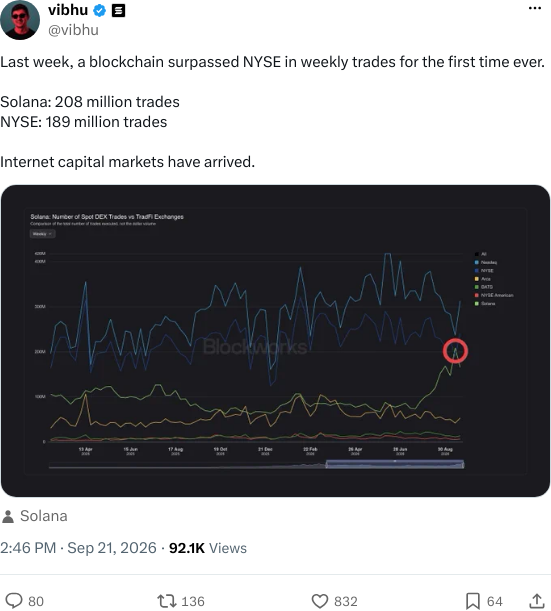
We’re pretty excited to be featuring the very best multisig wallets in 2026.
I’m actually looking for one myself, and in this write-up towards the end, I’ll tell you which ones my top choice.
My journey with cold wallets started by buying a Ledger Nano X.
It looks like a simple USB hard drive, with a built-in screen, and a few buttons. You set it up and automatically get recovery keys, which is basically a 12-word password more or less.
As of today, you can sign in and use pretty much all dApps with either cold or hot multisig wallets.
The rise of aggression towards folks that have crypto assets and cold storage has been around since the early days of crypto.
And that’s one of the main reasons why this write up is special.
Why is it important to understand multisig wallets?
Using a multisig wallet, not only provides better management for multiple folks that own these assets, it also is a great defense mechanism against bad actors.
In crypto, there’s no lack of haters.
By using the best multisig wallets there’s no way for anyone to access your assets without the help of the other folks you choose to custody them.
What Is a Multisig Wallet?
A multisig wallet stands for multiple signature custody.
You need a majority number of signatures to actually take any action on these type of wallets.
For example, if you have a wallet that requires 3 signatures, then for the most part 2 signatures are enough to interact with dApps, make swaps, buy, and sell assets, and even stake them.
So in short, as long as there’s a majority number of signatures, the wallet can function as it should.
The truth here is that many of the best wallets featured in this post can be customized in a variety of ways.
How Multisig Differs From a Single-Key or MPC Wallet
A single wallet simply has two ways for recovery. You either use your secret phrase or you use a private key to recover a crypto wallet.
When it comes to a multisig wallet, each signature has its own secret phrase, and private key. Perfect to diversify risk.
A hardware wallet is a signer in these setups, not always the vault.
An MCP (model context protocol) wallet works with AI, and it’s pretty useful for institutions. The MCP wallet fractionalizes the secret key and the private key into so many pieces, that makes it hard to decrypt.
Agent payments sit in our what is x402 guide.
Who Uses Multisig Wallets
Individuals / HNW Self-Custody
Even though I’ve only held a Ledger Nano, I can tell you that I’ve always been interested in the multi sig wallet model.
This cool tech belongs to everyone. From individuals just getting started, to people with high net worth. Start with a small amount like $10.
DAOs and Protocol Treasuries
DAOs and protocol treasuries leverage multisig to custody assets between stakeholders. Favorites here are Solana and Ethereum. Squads leads Solana. Safe leads Ethereum. Safe is still the Gnosis Safe product most treasuries mean.
Teams and Businesses
Squads is powering more than 250 companies: Jupiter, Jito, Pyth, Kamino, Backpack. Safe covers Worldcoin, Polymarket, CoW Protocol, Gnosis Pay, 1inch.
How We Ranked These Wallets
- Security model (hardware vs software vs smart-contract)
- Chain support (BTC-only vs EVM vs multi-chain)
- Setup complexity / who it's built for
- Cost (free/open-source vs subscription vs device cost)
- Track record (audits, incidents, time in market)
Which brands get the most search demand
This section is about query returns, not investment returns.
Search traffic per month
Semrush UI · pulled 2026-09-21 · US organic snapshot Sep 20, 2026 · one bar per brand
US organic traffic
How These Wallets Work
Official and product-channel walk-throughs for each wallet in this list.
Ledger
How to set up your Nano X.
Trezor
How to set up a Trezor hardware wallet.
Bitkey
How Bitkey works.
Safe
How to set up and use Safe Wallet.
Casa
What is Casa? A quick explainer.
Unchained
How collaborative custody works.
Sparrow
Setting up a 2-of-3 multisig in Sparrow.
Electrum
Electrum wallet walk-through.
BitGo
How BitGo custody works.
Squads
How Squads treasury management works.
Best Multisig Wallets in 2026
1. Ledger: Best Hardware Multisig
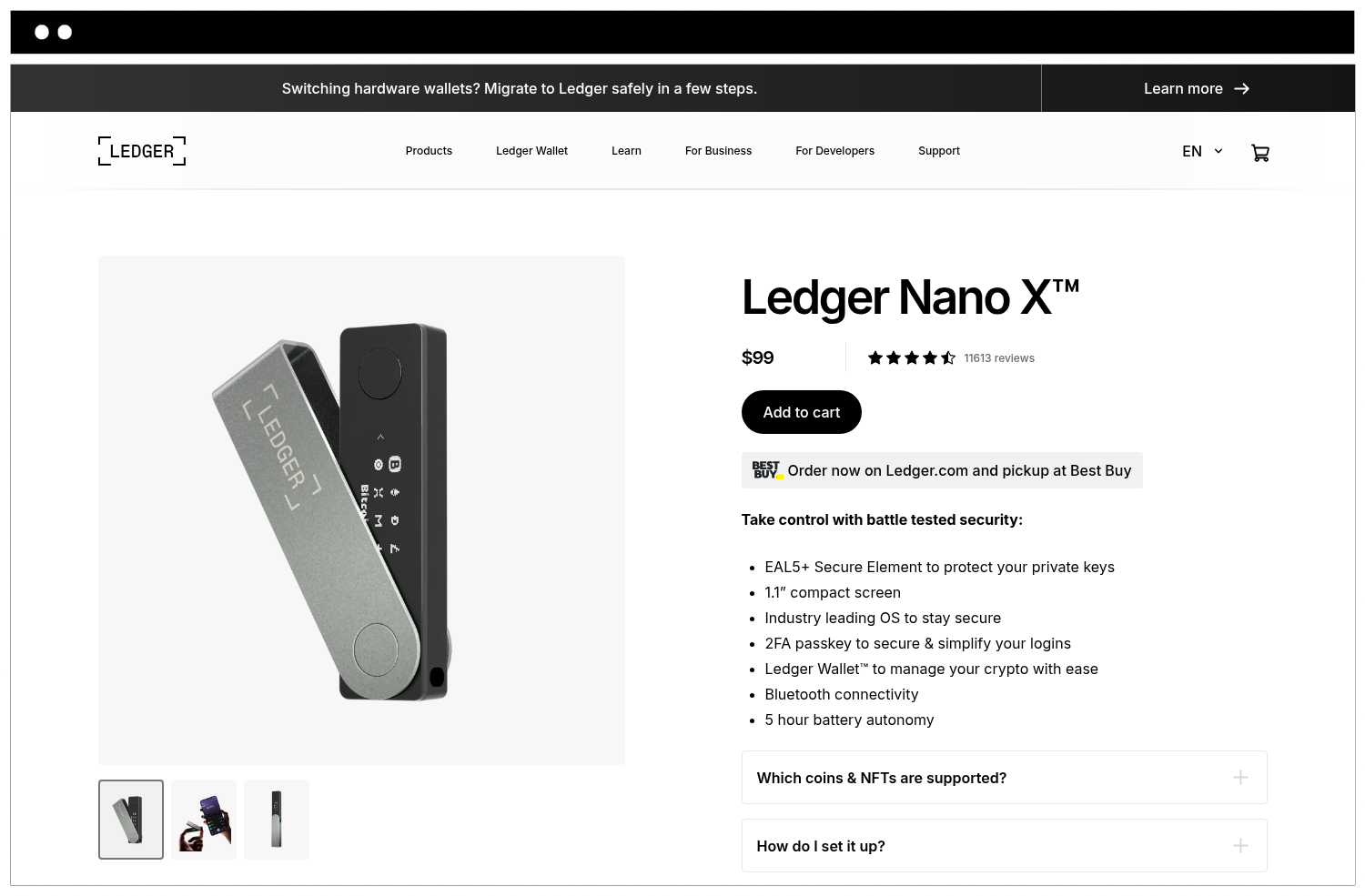
- Founder / origin: Ledger launched in France in 2014. The Nano X made the brand a default signer.
- Core mechanism: Keys live on a secure element. You confirm spends on the device.
- Who it’s for: Anyone who wants a physical button on the key.
- Differentiator: Biggest search and traffic name in this list.
- Honest tradeoff: Closed firmware.
- Type: Hardware multisig signer.
Ledger Nano X
Bluetooth signer. OLED. USB-C. Closed firmware. EAL5+. $99 USD. ASIN B07M6R4NK3.
Ledger Flex
2.8" E Ink. EAL6+. $249 USD.
Ledger Stax
3.7" curved E Ink. $399 USD.
Ledger
Hardware multisig signer
2. Trezor: Best Open-Source Hardware Multisig
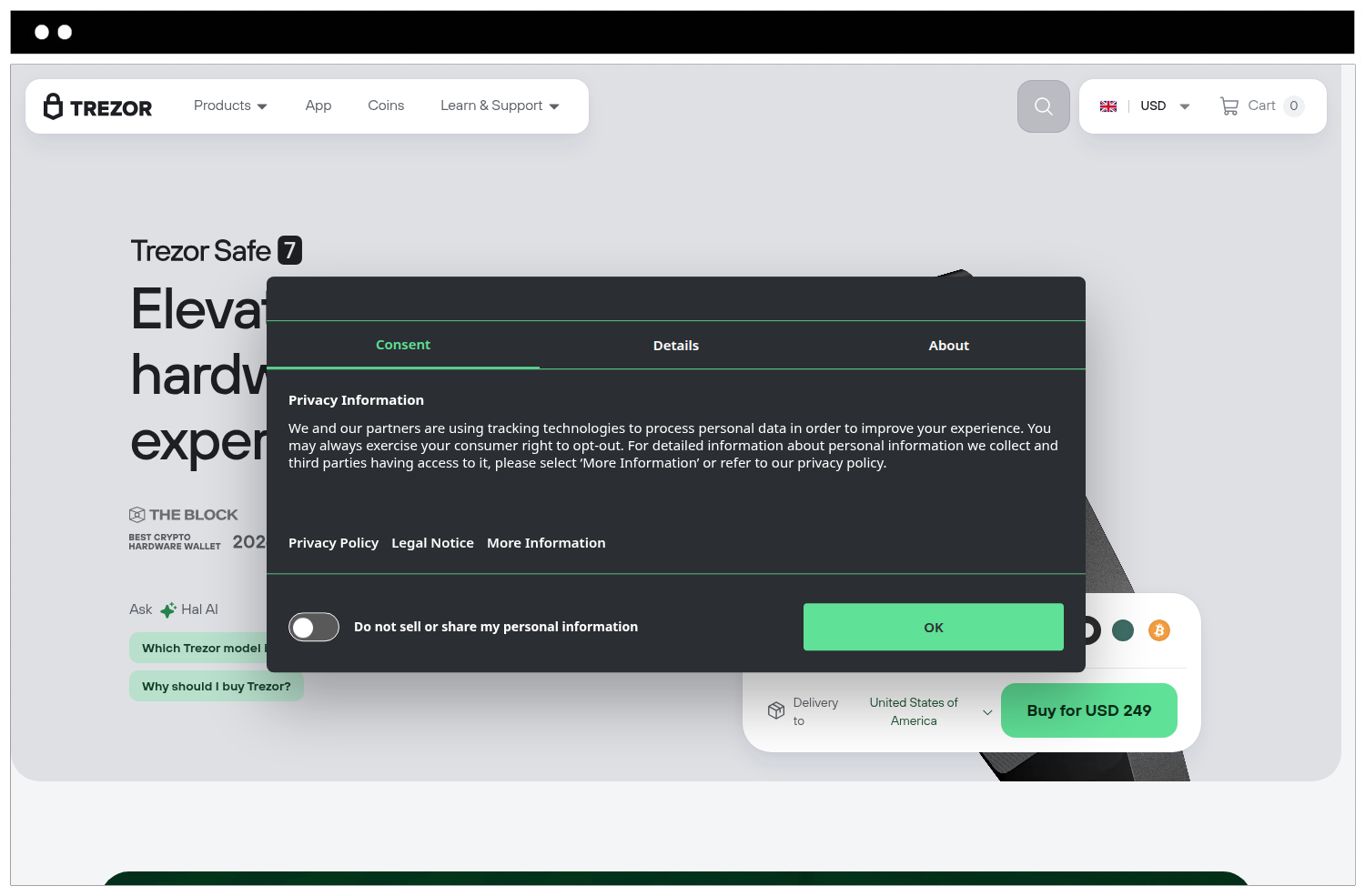
- Founder / origin: SatoshiLabs shipped the first Trezor in 2014 in Prague.
- Core mechanism: Keys stay on the device. Pair with Sparrow or Electrum for M-of-N.
- Who it’s for: Bitcoin-first folks who want open-source signers.
- Differentiator: You can read the firmware.
- Honest tradeoff: Suite is not a multisig UI.
Trezor Safe 7
Color touchscreen. Bluetooth. Dual secure element. Open firmware. $249 USD.
Trezor Safe 5
From $129 USD.
Trezor Safe 3
$59 USD. Good second or third key in 2-of-3.
Trezor
Hardware multisig signer
3. Bitkey: Best Consumer-Friendly Multisig
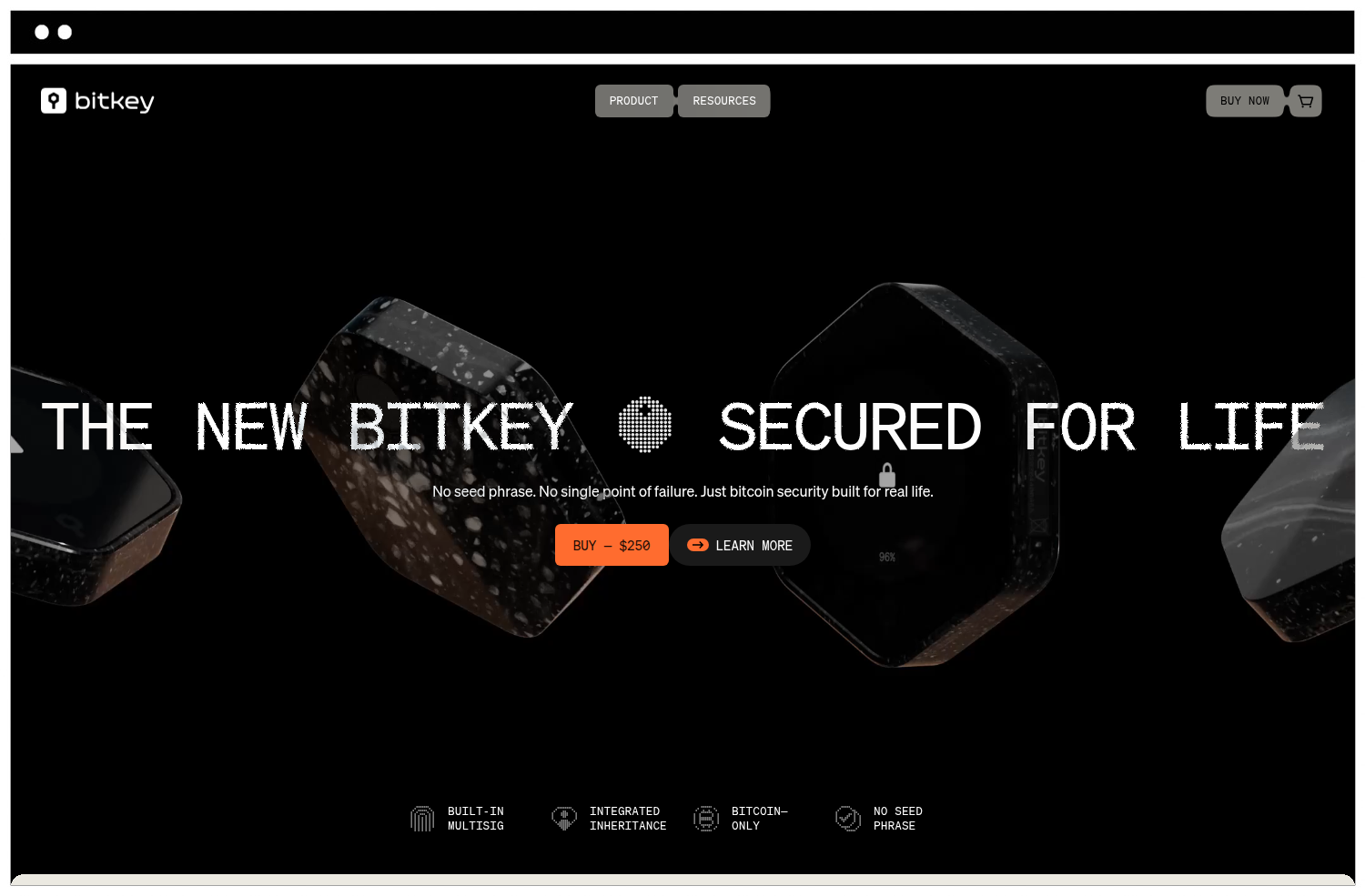
- Founder / origin: Bitkey is Block’s consumer Bitcoin product.
- Core mechanism: Phone key plus device key spend. Server key is for recovery.
- Who it’s for: Bitcoin people who will not open Sparrow.
- Differentiator: Finished 2-of-3 in a box. No seed-phrase UX.
- Honest tradeoff: Bitcoin only.
Bitkey with screen
BTC only. Fixed 2-of-3. $250 USD.
Bitkey no screen
$150 USD.
Bitkey
Hardware multisig wallet
4. Safe (formerly Gnosis Safe): Best for EVM/DAO Treasuries
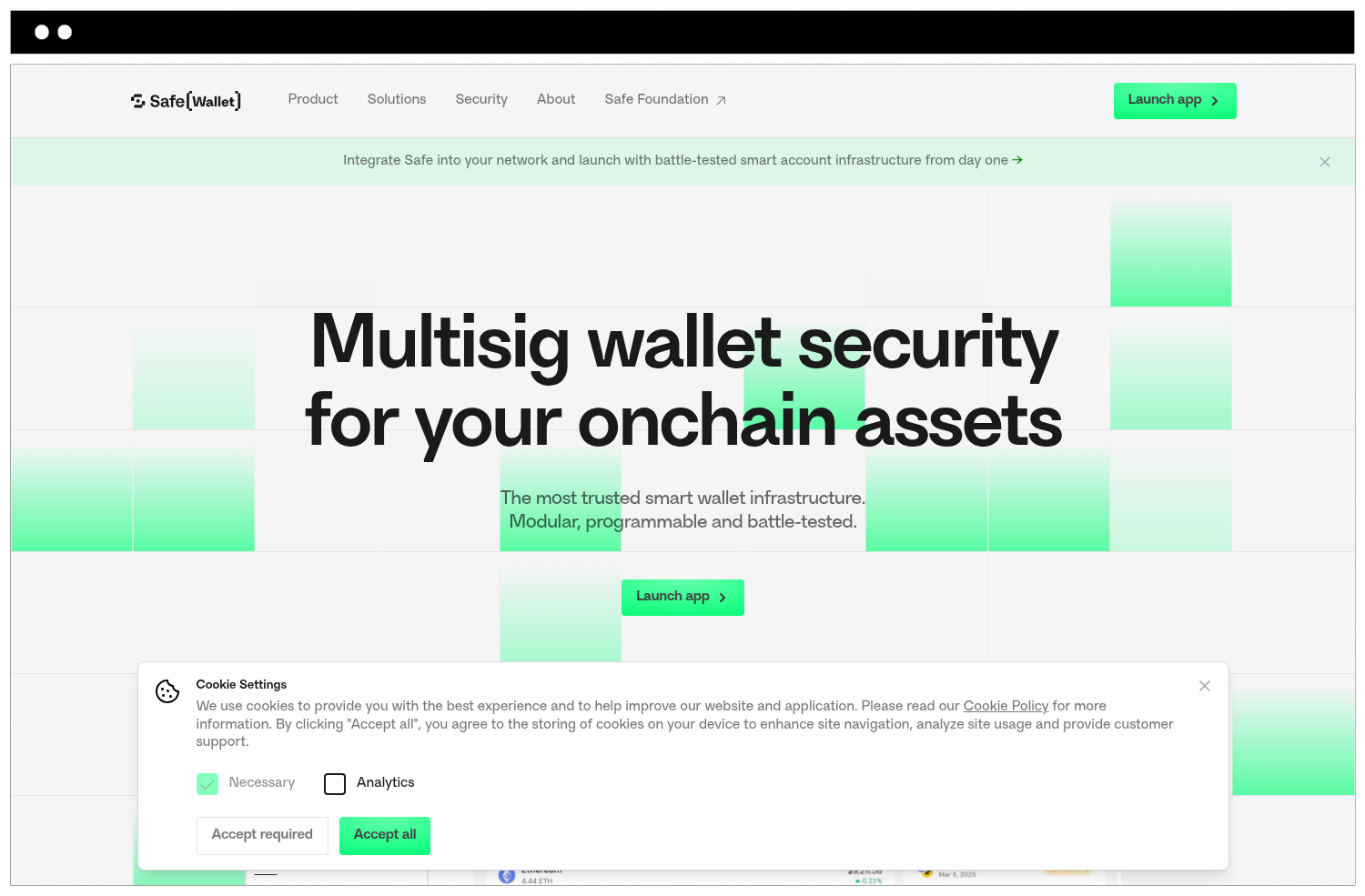
- Founder / origin: Gnosis shipped Safe. Now under Safe Labs.
- Core mechanism: Onchain smart account. Owners sign. M of N moves the funds.
- Who it’s for: DAO treasuries and EVM teams.
- Differentiator: The Ethereum treasury standard.
- Honest tradeoff: Smart contract risk.
Safe is a smart contract wallet, not a seed app.
Safe Wallet
Onchain N-of-M. Ethereum and L2s. $0 plus gas.
Safe
Software multisig wallet
5. Casa: Best Guided/Assisted Multisig for Individuals
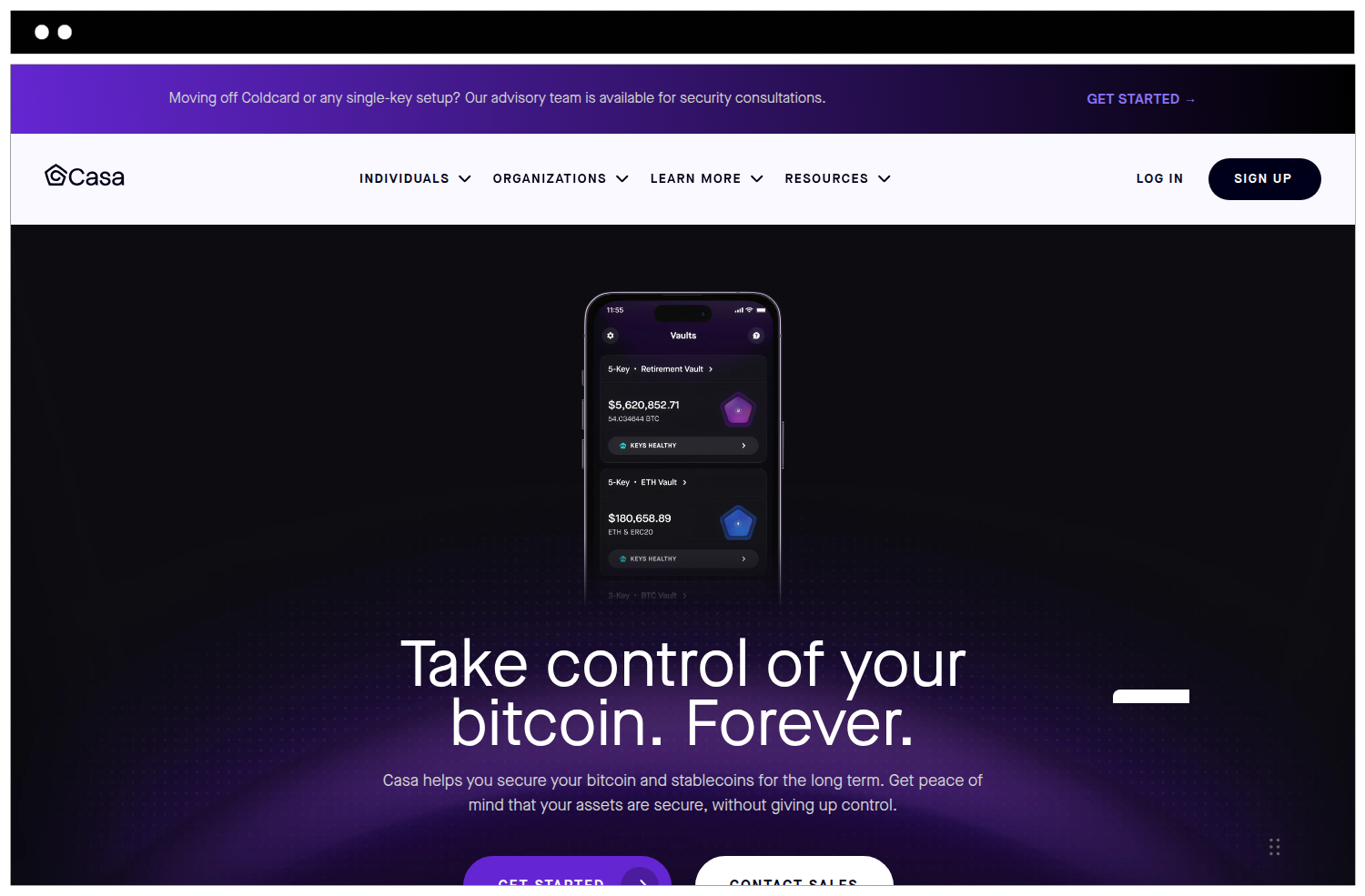
- Founder / origin: Casa started in 2018 around Jameson Lopp and Nick Neuman.
- Core mechanism: You hold keys on phone and hardware. Casa holds one recovery key.
- Who it’s for: Individuals and families who want a guided vault.
- Differentiator: App plus support, not a raw PSBT workflow.
- Honest tradeoff: Yearly fee.
Casa Standard
3-key 2-of-3. $250 USD/yr. Standard Plus $1,100/yr. Premium 5-key $2,100/yr.
Casa
Software multisig wallet
6. Unchained: Best Collaborative Custody
- Founder / origin: Unchained turned collaborative Bitcoin custody into a priced vault.
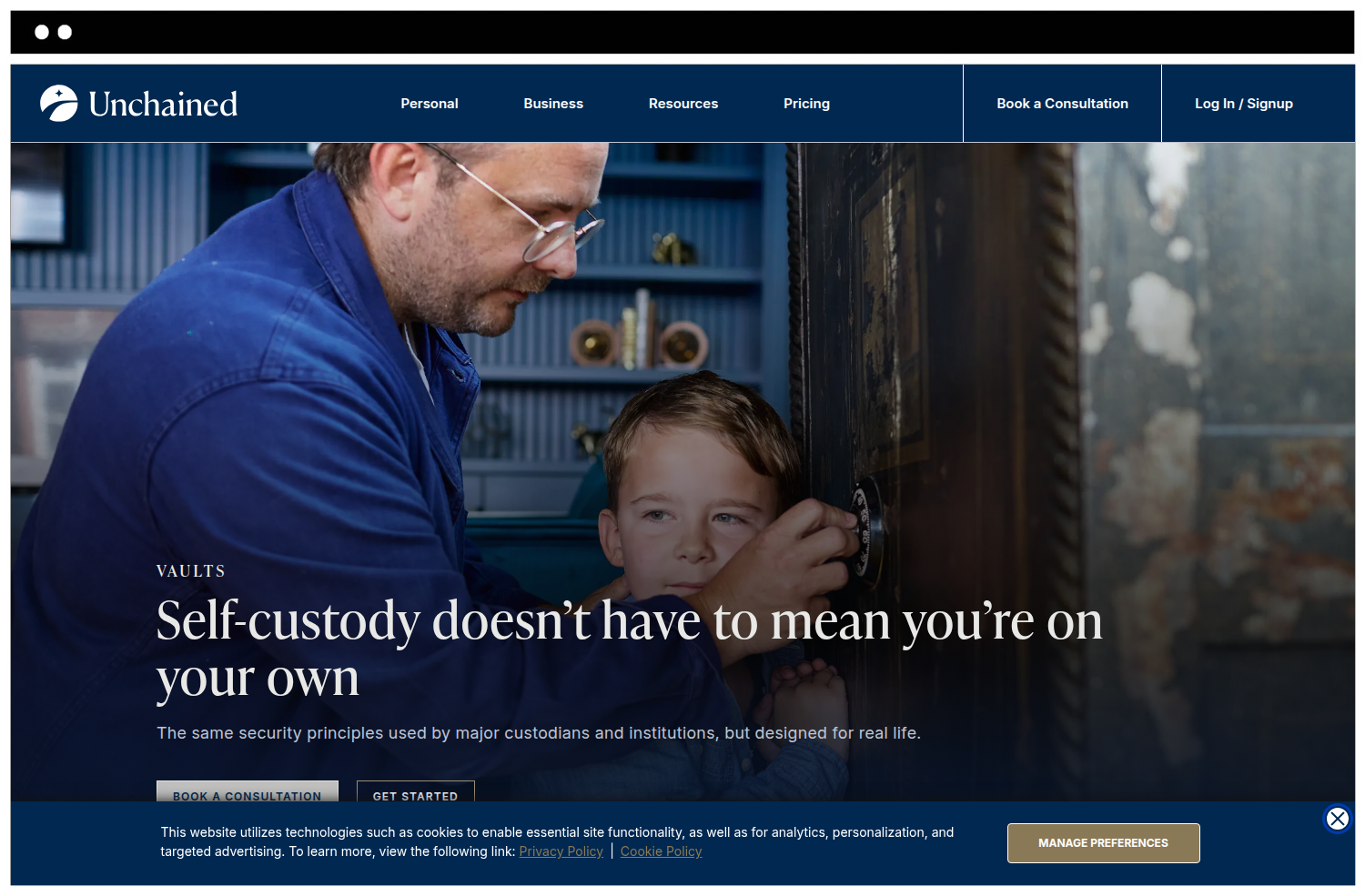
- Core mechanism: BTC 2-of-3. You hold two keys. Unchained holds one.
- Who it’s for: Bitcoin holders who want a published vault.
- Differentiator: You can leave with your two keys.
- Honest tradeoff: Bitcoin only.
Unchained is collaborative custody, not a single-seed wallet.
Unchained Vault
$250 USD per vault per year.
Unchained Vault
Software multisig wallet
7. Sparrow Wallet: Best Free Bitcoin Multisig
- Founder / origin: Craig Raw built Sparrow as a desktop Bitcoin wallet.
- Core mechanism: Full BTC multisig on your machine.
- Who it’s for: People who will run desktop software.
- Differentiator: Free. No subscription.
- Honest tradeoff: You operate it.
Sparrow Wallet
$0 USD.
Sparrow Wallet
Software multisig wallet
8. Electrum: Best Veteran Bitcoin Multisig
- Founder / origin: Thomas Voegtlin shipped Electrum in 2011.
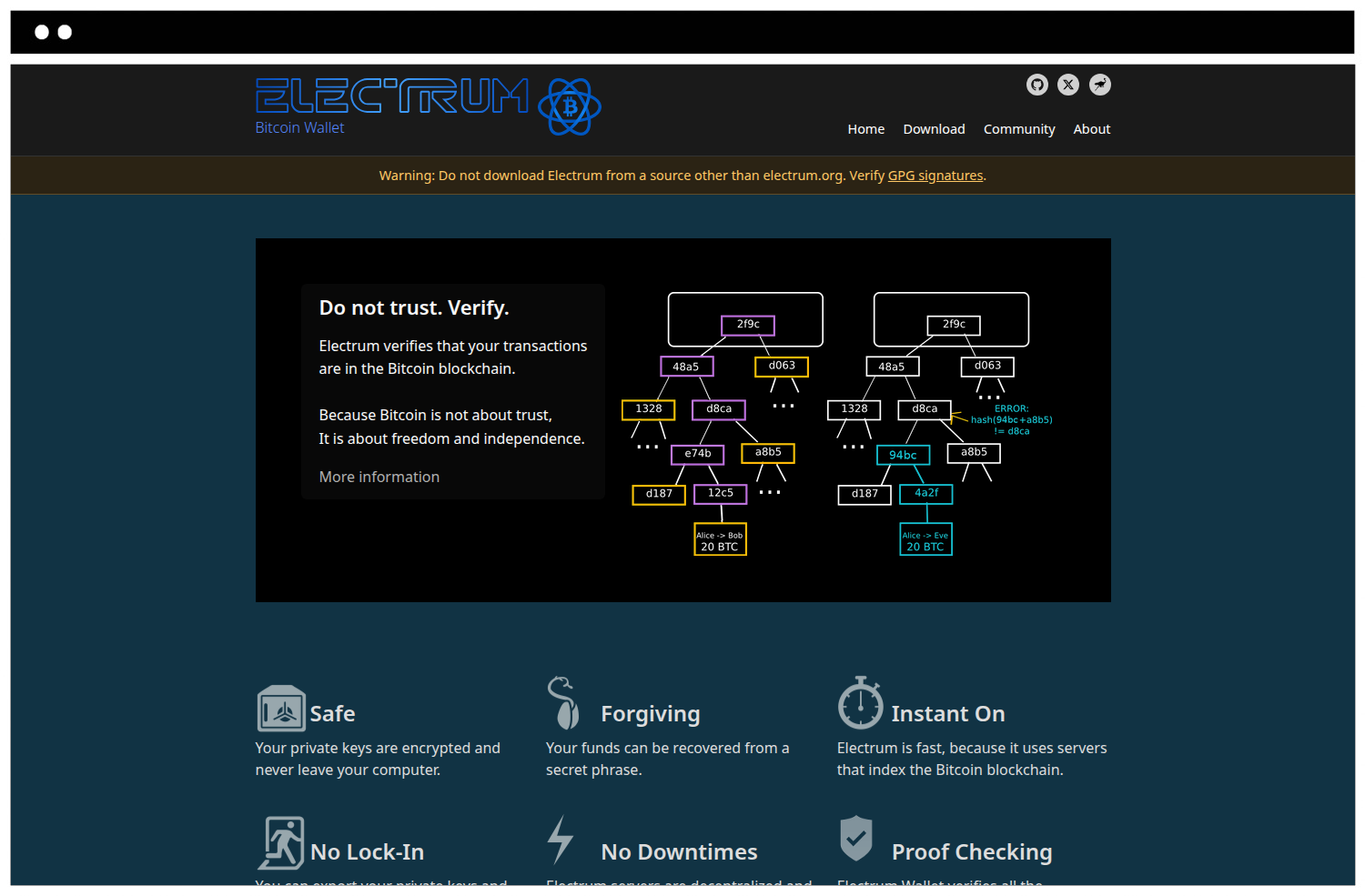
- Core mechanism: Longest-running BTC multisig client in this list.
- Who it’s for: People who already know Electrum.
- Differentiator: Time in market.
- Honest tradeoff: Old UI.
Electrum
$0 USD.
Electrum
Software multisig wallet
9. BitGo: Best Institutional Multisig/MPC
- Founder / origin: Mike Belshe started BitGo in 2013.
- Core mechanism: Fund-size custody, not a DIY app.
- Who it’s for: Institutions and funds.
- Differentiator: Qualified custody stack.
- Honest tradeoff: Sales-quoted pricing.
BitGo Qualified Custody
Sales-quoted.
BitGo
Institutional multisig / MPC
10. Squads: Best Solana-Native Multisig
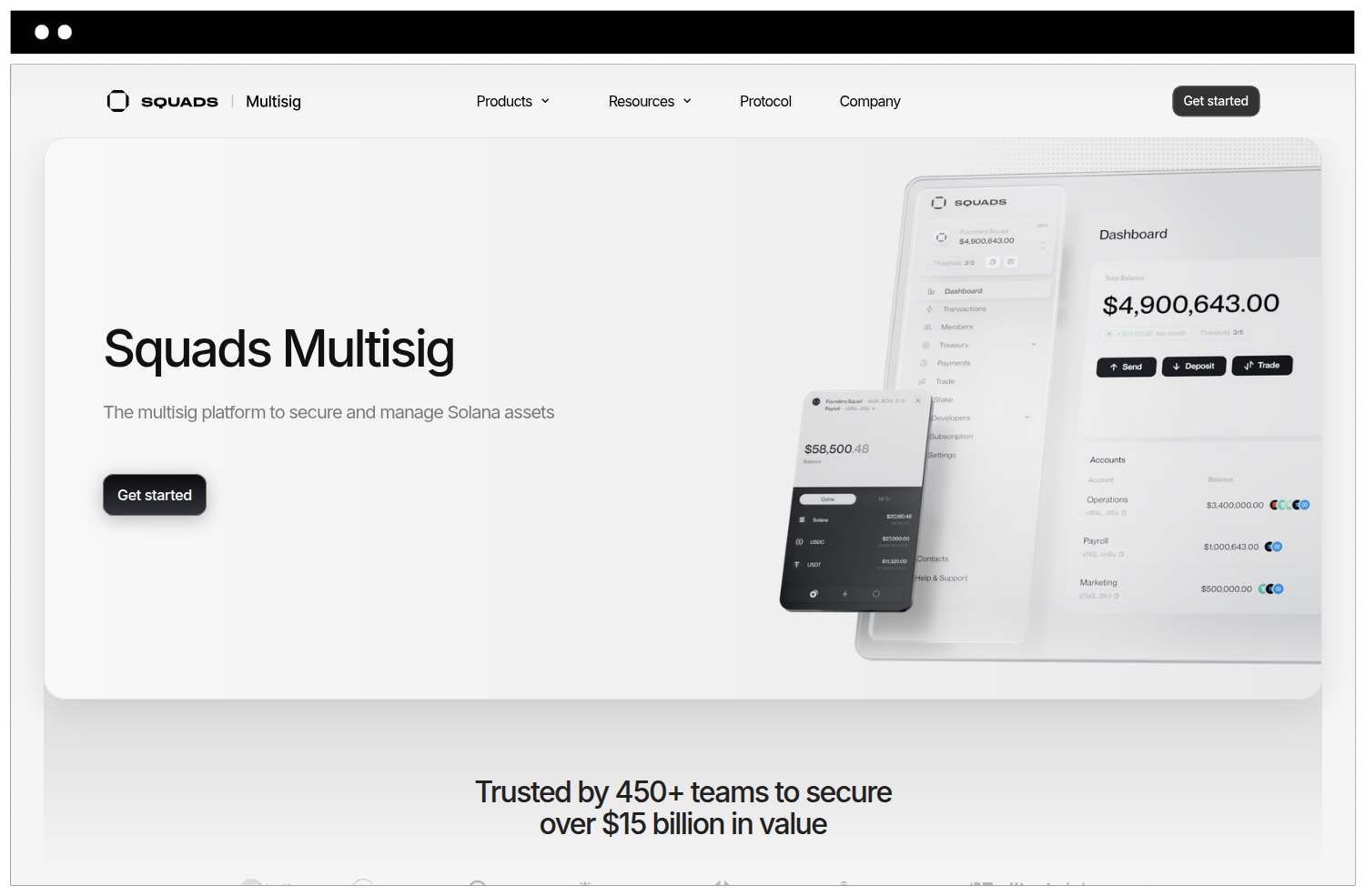
- Founder / origin: Squads Labs built the Solana smart-account standard.
- Core mechanism: Onchain Solana multisig. Jupiter, Jito, Pyth, Kamino, Backpack run on it.
- Who it’s for: Solana teams.
- Differentiator: Solana-native.
- Honest tradeoff: Not a Bitcoin vault.
Squads is the solana multisig standard here.
Squads Basic
$0/mo plus deploy fee.
Squads Pro
$49/mo.
Squads
Solana-native multisig
Best Multisig Wallet by Use Case
Best for Bitcoin-Only Holders
This is the best bitcoin multisig lane in this list. Unchained Vault. BTC 2-of-3. You hold two keys. Unchained holds one. $250 per vault per year. Alternates: Casa and Sparrow.
Best for EVM/DAO Treasuries
Safe Wallet. Onchain N-of-M on Ethereum and L2s. $0 plus gas.
Best for Institutions/Funds
BitGo Qualified Custody. Sales-quoted. Fund-size stack.
Best for Solana
Squads. Basic is free plus deploy. Pro is $49/mo.
Best Free/No-Subscription Option
Sparrow Wallet. Full BTC multisig at $0. Electrum is the veteran alternate.
What to Look For in a Multisig Wallet
Threshold Configuration
M stands for signatures needed. N stands for how many keys exist. A 2-of-3 means three keys, two to move funds. Safe, Sparrow, Electrum, and Squads let you create your own M-N system.
Key Distribution and Geographic Separation
Do not keep every key in one house. Split devices and people.
Recovery Mechanisms
Write down who holds which key and how you replace a lost one before you fund the vault.
Chain and Asset Support
Bitcoin-only, EVM, or Solana. Pick the wallet that matches the chain you actually hold.
Open-Source vs Closed / Audit History
Trezor, Sparrow, Electrum, Safe, and Squads publish code. Ledger firmware is closed.
Risks of Multisig Wallets
Lost-Key / Threshold Miscalculation Risk
One lost key can freeze the vault if your threshold is wrong.
Smart Contract Risk
Safe and Squads are contracts. A bug in the contract is a bug in the vault.
Operational Complexity Risk
The more keys you add, the slower you react.
Custodial vs Self-Custodial Confusion
Casa, Unchained, and Bitkey hold one key. That is assisted, not fully self-run.
Frequently Asked Questions
What is the safest multisig wallet?
When it comes to traffic in crypto, Ledger is one of the companies that has the greatest chops.
What's the best multisig wallet for Ethereum?
Our pick is Safe.
What's the best multisig Bitcoin wallet?
Sparrow seems to be leading when it comes to the BTC ecosystem.
What's the best multisig Solana wallet?
Our pick goes to Squads.
Is multisig better than a hardware wallet alone?
It really depends if you are collaborating with others or not in my opinion.
What's the difference between multisig and MPC?
Multisigs operate with M-N setups. MCPs fractionalize one key into multiple pieces.
How many signers should a multisig wallet have?
At a minimum you have multisig wallets that work with a 2-3 signature set-up.
Can retail users use multisig, or is it just for institutions?
Both can use them.
Conclusion
If I were to buy a multisig wallet, my pick goes to Ledger. Not because that was my first cold wallet, it’s because of the amount of traffic that the company pulls.
The above is the ultimate signal of a company that’s championing their vertical.
Disclaimer: Some links in this post are affiliate links. When you click through and make a trade or sign up, we may earn a small commission at no extra cost to you. We only recommend platforms and tools we actually use and believe will help you navigate the crypto markets more effectively. This helps us pay the bills and keep delivering the alpha and market insights you rely on. Thanks for supporting Joined Crypto!









.png)